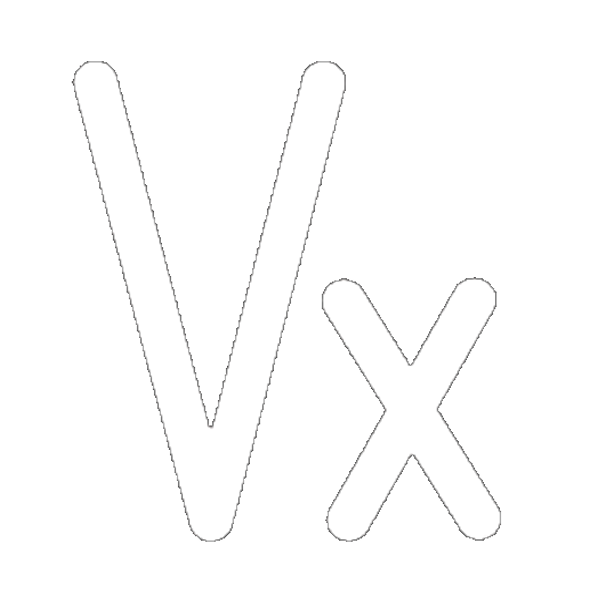
Mars Sesquiquadrate Vertex
Pressure at the Turning Point

The Mars person carries urgency; the Vertex person stands at a threshold. This sesquiquadrate (135°) creates friction that feels like pressure applied at an angle, not head-on collision, but a force that won't let the Vertex person remain still. The Mars person's drive doesn't align cleanly with the Vertex person's sense of what the moment demands. Instead, it prods sideways, creating a low-grade agitation that often precedes a shift the Vertex person may not have initiated alone.
The Mars person experiences the Vertex person as a pivot point, someone whose presence seems to activate decision-making that might otherwise be postponed. The Vertex person, in turn, feels the Mars person's restlessness as both catalyst and intrusion. Where they sense a turning point or critical juncture, the Mars person arrives with action-ready energy that may feel premature, excessive, or pointed in a direction not yet chosen. The Vertex person may find themselves saying yes or no faster than usual, or discovering that the Mars person's insistence has clarified what they actually want, a concrete moment being the Mars person pushing for a conversation about commitment while the Vertex person, irritated by the timing, ends up articulating a boundary they'd been avoiding for months.
The sesquiquadrate doesn't produce harmony, but it does produce motion. The Mars person's forward momentum meets the Vertex person's threshold-sensing in a way that rarely permits stalling. Over time, the Vertex person may experience this as either liberating or exhausting, depending on whether the Mars person's urgencies align with their own developmental readiness. The Mars person, meanwhile, may feel repeatedly thwarted by their resistance to being rushed, yet simultaneously drawn back because something about the dynamic demands action. The relationship itself becomes a kind of pressure valve, neither person can remain passive in it for long.
The immature expression is the Mars person mistaking the Vertex person's hesitation for weakness, or the Vertex person using the Mars person's urgency as an excuse to avoid their own agency. Maturely, the Mars person learns that the Vertex person's threshold-sensing is a form of timing intelligence, not obstruction. The Vertex person learns that the Mars person's drive, though uncomfortable, often arrives when a choice genuinely needs to be made. The friction itself becomes useful, a signal that something in the dynamic or in both people's lives is asking for change.