
Pallas Opposition Venus
Strategy Against Aliveness

"I embrace the paradoxes within myself and in my relationships, allowing growth and transformation to occur through the tension and polarity."
Pallas Opposition Venus Opportunities
- Harmonizing logic and love
- Embracing paradoxes for growth
Pallas Opposition Venus Goals
- Embracing paradoxes for growth
- Finding balance between reason and emotion
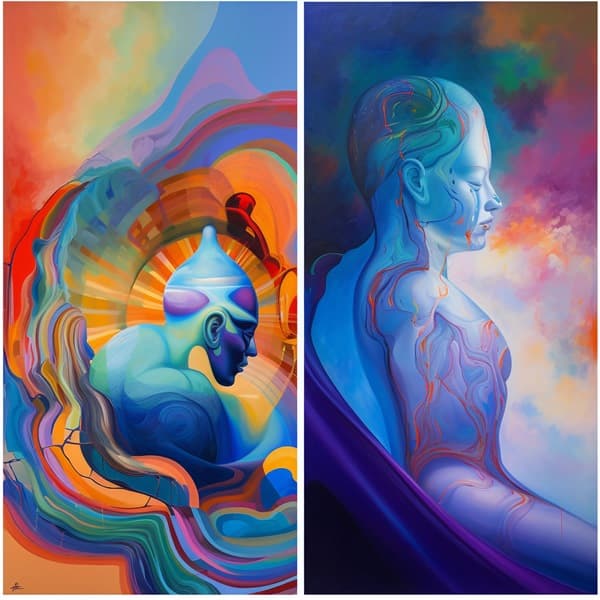
Pallas opposite Venus creates a fundamental tension between how you recognize pattern and how you feel belonging. Pallas sees the structure, the logic of connection, the strategy of desire, the architecture of relationship. Venus feels the pull, the simple yes or no of attraction, the non-negotiable fact of what moves you. These two operate on different timescales and different evidence. When they oppose, you experience them as competitors for authority.
The lived pattern often looks like this: you analyze a relationship or creative choice with precision, map its logic, see exactly why it should work, and then feel nothing, or feel the opposite of what your analysis predicts. Or you feel a strong pull toward something (a person, an aesthetic, a commitment) and immediately interrogate it, looking for the flaw in the reasoning, the hidden cost, the way it violates your actual interests. You may appear indecisive because you genuinely are split. The decision-making process becomes a negotiation between two internal authorities that rarely vote the same way. You say yes to the partnership that makes sense on paper, then resent the terms it requires. You refuse the connection that feels alive because you cannot justify it logically.
The real friction is this: strategy and desire are not the same thing, and forcing them into agreement exhausts you. You may spend enormous energy trying to make your feelings rational or your logic feel good, as if one should simply obey the other. What actually happens is that Pallas grows brittle (over-defended, suspicious of feeling) or Venus grows muted (you choose safety over aliveness, then wonder why connection feels hollow). The cost is that you can become estranged from your own preferences, uncertain whether you actually want something or whether you've simply reasoned yourself into it.
What this opposition is building toward is discernment without self-betrayal. You are learning to let strategy and desire inform each other without requiring them to merge. Pallas can ask: What is the actual structure of this situation? What am I not seeing? Venus can answer: What matters to me here? What do I genuinely need? Neither has to win. The friction teaches you that the most intelligent choice is often the one that honors both the logic and the feeling, not by finding a compromise, but by refusing false choices. You become capable of saying: this makes sense and I don't want it, or this feels right and I need to understand why before I commit. That clarity, hard-won through the opposition, is where your real power lives.



























