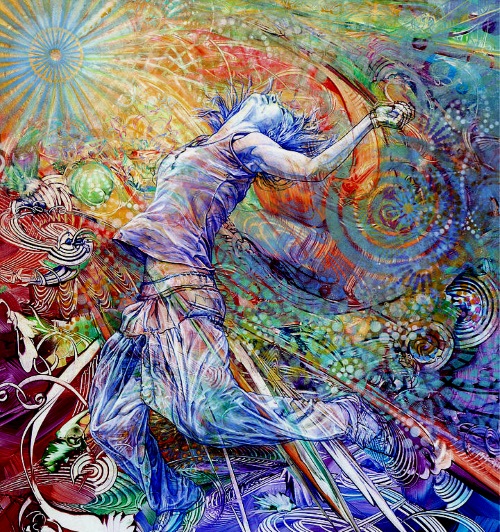
Neptune Square Chiron
Neptune dissolves boundaries and obscures motive; Chiron locates the exact wound and names it. In this square, the Neptune person's tendency to soften, merge, or spiritualize meets the Chiron person's need to isolate, examine, and speak the unspeakable truth. The Neptune person may offer compassion or transcendent reframing precisely when the Chiron person is trying to look directly at pain without mythologizing it. They experience this as evasion, a well-intentioned refusal to sit with what hurts. Conversely, the Chiron person's directness about damage and limitation can feel like a cold blade to the Neptune person, who reads this clarity as a denial of possibility or spiritual dimension.
The friction operates through competing epistemologies. The Neptune person knows through feeling, intuition, and symbolic resonance; they trust what dissolves rational categories. The Chiron person knows through specificity, which wound, when it formed, how it shaped behavior. When the Chiron person says "this is my pattern," the Neptune person may hear "this is your story" or "you can transcend this." When the Neptune person offers spiritual or imaginative reframing, the Chiron person may feel unseen, as though their particular injury has been absorbed into something larger and less true. A concrete moment: the Chiron person describes a specific betrayal; the Neptune person responds with a poem or metaphor about universal suffering. The Chiron person goes silent, not from acceptance but from the recognition that they have not been heard in their specificity.
The Neptune person's gift is the capacity to hold suffering without being crushed by it; the Chiron person's gift is the refusal to let pain become invisible or abstract. What neither may recognize is that precision without compassion can calcify into diagnosis, and compassion without specificity can become spiritual bypass. The Neptune person gradually learns that transcendence is not the opposite of wound-naming but its companion, that the Chiron person's insistence on clarity is not coldness but a form of love. The Chiron person discovers that the Neptune person's instinct toward healing (rather than mere examination) is not denial but a different literacy about what makes transformation possible. Both must resist the assumption that their way of knowing exhausts the truth.