Neptune Trine Part of Fortune
Ease Mistaken for Wisdom


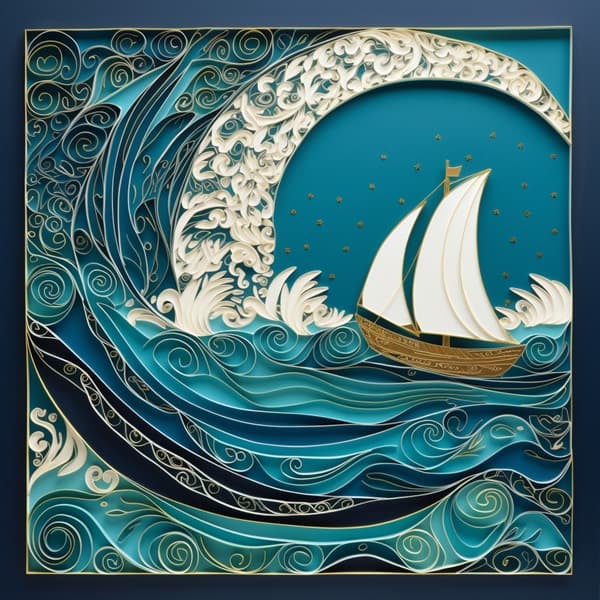
"I trust my intuition and follow my inner guidance, effortlessly attracting abundance and fulfillment into my life."
Neptune Trine Part of Fortune Opportunities
- Deepening intuitive connection
- Cultivating trust in guidance
Neptune Trine Part of Fortune Goals
- Overcoming resistance to intuition
- Embracing creative cosmic flow
The Neptune person dissolves boundaries and reframes difficulty through imagination; the Part of Fortune person finds natural openings and circumstantial support. This trine creates a relational field where visionary fluidity meets effortless opportunity, and the two can either amplify each other's gifts or enable mutual drift into fantasy without consequence.
The Neptune person brings diffusion, intuition, and imaginative reframing to the relationship. The Part of Fortune person experiences this as an opening, a sense that obstacles can be dissolved, that there is a way through without force. They may feel the Neptune person sees possibility where others see only walls. In turn, the Part of Fortune person moves through the world with an almost uncanny ease, as if doors open without effort. The Neptune person finds this liberating; they often struggle with friction and resistance, and here is someone who seems to glide past it. However, the Part of Fortune person may begin to rely on the Neptune person's ability to spiritualize or romanticize difficulty, using it as permission to avoid practical reckoning. When the Part of Fortune person faces a genuine obstacle, the Neptune person may instinctively soften it into metaphor rather than help name what actually needs to change.
The trine's real blind spot emerges here: both people can mistake fluidity for progress. The Neptune person's gift for seeing possibility without resistance, combined with the Part of Fortune person's natural luck and circumstantial support, can create a shared assumption that things will simply work out, that surrender is always the answer. Neither may notice when passivity has replaced discernment. A concrete moment: the Neptune person suggests abandoning a difficult project because "the energy isn't right," and the Part of Fortune person, accustomed to things falling into place without struggle, agrees, only to realize later that the project required exactly the friction both were avoiding.
The mature expression asks both people to distinguish between genuine intuitive guidance and convenient escape. The Neptune person learns that the Part of Fortune person's ease is not permission to abandon form; the Part of Fortune person learns that the Neptune person's vision requires translation into choice, not just receptivity. When this works, the Neptune person's imaginative compassion softens the Part of Fortune person's potential entitlement, while the Part of Fortune person's grounded prosperity keeps the Neptune person's dreams from evaporating entirely.