
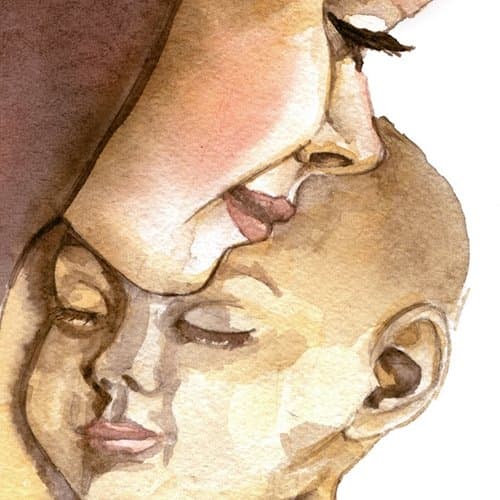
Composite Sun in Cancer
The Merged Illusion


Composite Sun in Cancer organizes the relationship around emotional fusion and the fantasy of perfect understanding. This is not a placement that creates ease. It creates a gravitational pull toward enmeshment, where the boundary between one person's feelings and the other's becomes permeable, then invisible. The relationship forms around the promise that if the connection is close enough, attuned enough, merged enough, neither will ever feel alone. This is the central architecture: the belief that togetherness can be a solution to the fundamental human experience of separateness.
What actually happens is that both people begin to organize around emotional caretaking. One or both become hypervigilant to the other's mood, reading silences for hurt, interpreting distance as rejection. Conversations that should be about logistics become about reassurance. A disagreement about where to spend the holidays becomes evidence that the relationship is failing. The relationship becomes a closed system where the primary work is not building a life together, but managing the emotional weather between you. This manifests in small moments: one person asking "are you okay?" not because something is wrong, but because the other person is quiet. The question is not really a question. It is a bid for merger.
Cancer at the composite Sun is organized around the fear that if the focus shifts from each other's emotional states, the other person will leave. This is the trade the relationship makes: emotional intensity and constant availability in exchange for the illusion of safety. What it costs is the capacity to be separate and still be loved. It costs the ability to have an inner life without it becoming a problem to solve together. It costs the kind of intimacy that does not require constant reassurance. The relationship may claim to want independence, but the dynamic often prefers the role of emotional custodian because it keeps the connection necessary.
The challenge is that this fusion eventually produces the very thing it was meant to prevent: resentment, suffocation, and the slow erosion of desire. When everything is about emotional attunement, nothing is about genuine contact. Caretaking is not the same as love. Neither is it the same as being known. The question is not how to deepen the emotional connection. The question is whether this relationship can survive two separate people with separate needs, separate silences, and separate reasons for their moods. Notice the next time the question of how the other person is feeling arises when what is actually being asked is whether they still love you.



























