Composite Vesta in 11th House
Devotion Divided Between Witness and Solitude

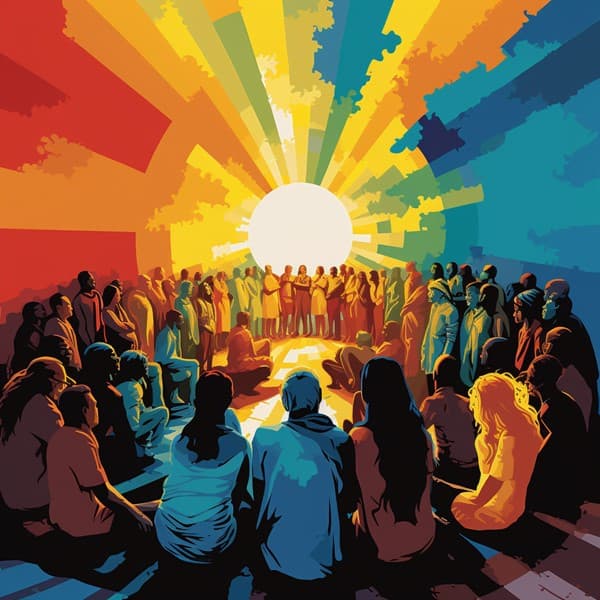
Composite Vesta in the 11th House organizes this relationship around shared purpose within community, yet builds the couple's actual integrity on their ability to step away from that very structure. The relationship functions visibly within friend networks, group projects, and collective causes, both people are often known as reliable, committed participants, but the relational engine runs on protected time that belongs only to them. This is not a contradiction the couple resolves; it is the permanent architecture they must tend.
The friction emerges quietly and often surfaces in concrete moments: one person realizes they have become the couple that always hosts, organizes, or carries group cohesion while their own relational needs go unmet. The other person may not immediately register this as a problem, they experience the group involvement as meaningful and shared. Over time, resentment accumulates not from the community work itself but from the unspoken assumption that the couple exists partly as a resource for others. A conversation that matters gets postponed because another friend needs planning help. A private disagreement stays unprocessed because there is always a group dinner, a cause meeting, or a collective project demanding presence. The relationship becomes a vehicle for collective good rather than the primary investment, and both people feel it as a slow erosion of privacy.
What makes this dynamic particularly difficult is that it can masquerade as strength. The couple appears unified, purposeful, and generously committed. They may genuinely believe their devotion to the group reflects their devotion to each other. But Vesta's flame requires solitude to burn true, and the 11th House naturally pulls toward collective space. When both people unconsciously use group involvement as a way to avoid the vulnerability of tending the relationship in private, where there is no audience, no shared mission, no external validation, the couple slowly becomes strangers who share a cause. The mature expression requires both people to recognize that protecting time away from the group is not selfish; it is the only way to know what they actually want from each other apart from what they want for the world.
The work is not to retreat from community but to deliberately choose when and how the couple participates in it. This means one or both people must sometimes say no to group needs in order to say yes to relational needs. It means asking directly: Are we here because we choose this together, or because we are afraid of what happens when we are alone? The answer will clarify whether this couple is building something for themselves or performing unity for an audience.