
Aquarius 27 Sabian
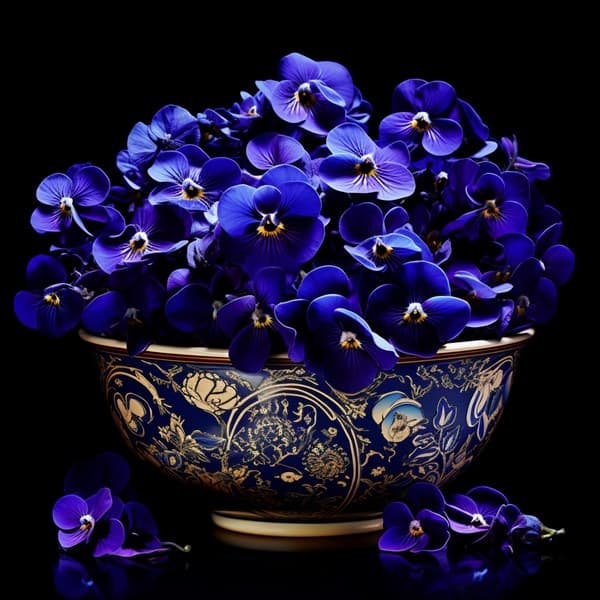
An ancient pottery bowl filled with violets

The bowl is old. The violets are fresh. This is not a marriage of past and present—it is a collision between what has been preserved and what refuses to stay still. At 27 degrees, Aquarius has moved past its need to revolutionize or belong to a movement. What remains is the question of whether beauty can live in a container that has already held everything it was meant to hold. This placement knows this pattern: the impulse to fill emptiness with something delicate, something that will prove the vessel still matters. A therapist's office decorated with fresh flowers. A carefully curated social media feed. The small rituals maintained after the relationships that justified them have ended. The bowl becomes the point. The violets are the apology the bowl makes for still existing.
There is exhaustion in this image, though it wears the face of aesthetics. By late Aquarius, the revolutionary fire has burned down to something more intimate and more fragile: the need to believe that what has been learned, what has already been become, still has value in a world that keeps moving forward. This energy can manifest as preserving—not out of attachment, but out of a quiet terror that if the tending stops, it would mean admitting it was never as important as it felt. Life is organized around small beauties because large ones have disappointed. There is a tendency to text people no longer known well, maintaining connection through gesture rather than presence. The old bowl is kept visible on the shelf, even though newer ones exist. The violets matter less than the act of placing them there, of saying: I still know how to make something beautiful.
The challenge is subtle. This configuration does not fail through excess or negligence. It stalls through a kind of aesthetic resignation masquerading as wisdom. There is a tendency to learn to want less, and mistake this for depth. There is a tendency to learn to appreciate what remains, and mistake this for acceptance. But the real trade is this: the safety of a finished form is chosen over the risk of being genuinely new. The ancient bowl cannot be remade. It can only be honored. And there is a particular loneliness in being the one who honors things—who sees their worth when no one else is looking, who places fresh flowers in them regularly, who has become, essentially, a custodian of beauty that no longer moves anyone but the self.
What needs to be noticed is where the questioning of whether the container deserves its contents has stopped. The violets are fresh because they are kept being replaced. But the bowl has not changed. It will not change. And somewhere in the quiet maintenance of this image, there is a protection from the knowledge that there might be a desire for something that does not fit neatly into what has already been become. Notice today what is being tended that no longer asks anything of you. That is where the real choice lives.



























