Aquarius 29 Sabian
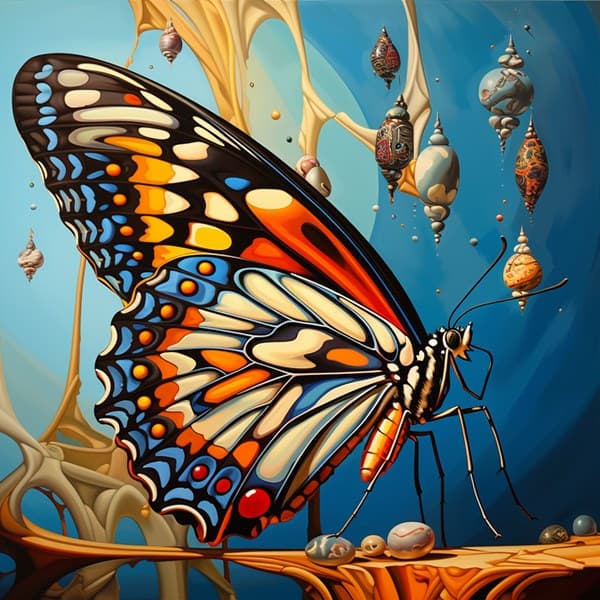
A butterfly emerging from a chrysalis

At 29 degrees, transformation has stopped being a promise and become a reckoning. The butterfly emerging from the chrysalis looks like liberation, but at this late degree the image reveals something else: the exhaustion of waiting, the brittleness of new wings, the immediate exposure to a world that will not pause for adjustment. This is not the romantic moment of breakthrough. This is the moment after the breakthrough, when you realize the chrysalis was also a shelter, and leaving it means you cannot go back inside. Aquarius at 29 degrees has spent itself on the idea of becoming different. Now it must live as the different thing, without the narrative of change to sustain it.
The central tension is between the promise of freedom and the disorientation of arrival. You have spent considerable energy imagining yourself outside the old structure—the job you would quit, the relationship you would leave, the version of yourself you would shed. But when the actual moment comes, when you are no longer contained by what held you, the absence of constraint does not feel like relief. It feels like vertigo. You sit in your new apartment or your new role and notice that freedom is not a feeling. It is a blank. You may find yourself reaching for the very structures you fought to escape, not because you want them back, but because at least they were familiar enough to move through. The butterfly does not soar immediately. It clings to the chrysalis shell, wings still damp, unable yet to fly.
What Aquarius at 29 gets wrong is the assumption that becoming yourself means becoming comfortable. You have organized your life around the vision of a freer self, but you have not organized it around the cost of that freedom: the loss of identity through opposition. When you were fighting the old system, you knew who you were in relation to it. Now that you are outside it, the question returns, sharper: who are you when there is no one to rebel against? This is why people at this degree often recreate the very constraints they escaped. Familiarity with constraint is easier than the responsibility of self-direction. You may find yourself joining new groups, adopting new ideologies, becoming devoted to new causes with the same intensity you once used to reject the old ones. The wings are dry now, but you are still not flying. You are building a new chrysalis.
What you are protecting yourself against is the vertigo of genuine autonomy. As long as you are still emerging, still becoming, you have a narrative. The moment you have fully emerged, you must answer to yourself alone. This is what the late degree reveals: not the triumph of transformation, but its completion and the silence that follows. The trade is this: you gave up belonging to something in order to belong to yourself, but you did not know that belonging to yourself requires a kind of faith you have not yet practiced. You will not find it in another system. You will not find it in another group. You notice now that you are waiting for permission to be yourself, even though there is no one left to give it.
The question is not whether you will change again. You will. The question is whether you will recognize the moment when you stop emerging and start choosing. That moment is not dramatic. It is the moment you stop explaining yourself to the person you used to be. It is the moment you make a decision not because it is different, but because it is what you actually want. Watch for the places where you are still performing your own freedom, still announcing your independence to an audience that is no longer listening. That performance is the chrysalis shell you are still clinging to.