Aquarius 6 Sabian
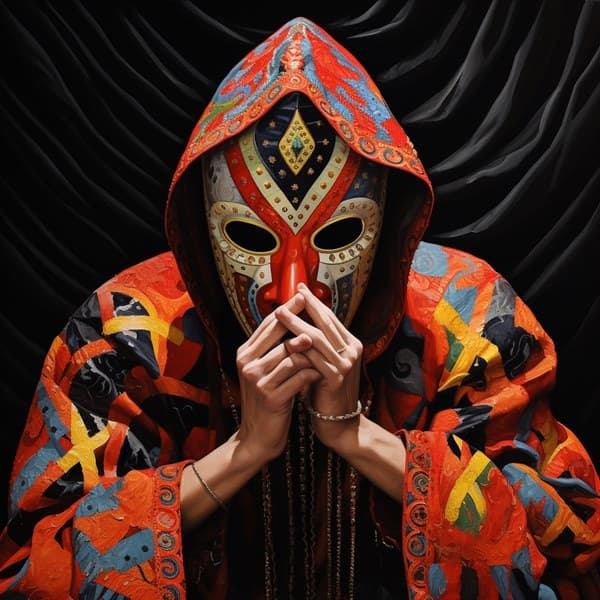
A performer of a mystery play

The mask comes first. Before any act, before any ritual, the face is hidden. This is not shyness or shame—it is a deliberate removal of the personal from the scene. At six degrees, this impulse is still raw, not yet refined into ideology or philosophy. What this degree observes is the moment someone decides that their actual thoughts and feelings are irrelevant to what needs to happen. The ritualistic acts follow naturally from this choice. Once the personal is gone, only the form remains, and form can be repeated, perfected, shared. This placement studies the exact gestures of a system they have just discovered: the cadence of a belief, the choreography of a movement, the precise language of a group. They practice these things alone in their room, or they perform them in public with an intensity that can read as mockery or genuine initiation.
The trade is visible here: authenticity for belonging. The mask allows entry into a world where individual doubt or contradiction does not exist. In that world, there is clarity. There is a script. There is no question about what comes next because it has all been decided. This energy is recognizable by a sudden adoption of a new vocabulary, an ability to speak the language of a system encountered last month as though born to it, and a relief when the need to decide is replaced by the ability to perform. The challenge here is that at six degrees, the mask can become permanent before there is any real understanding of what lies beneath it. The lesson not yet learned is that ritual without genuine curiosity hardens into dogma, or that belonging purchased through the erasure of self leaves one surrounded by people who have never met the person behind the mask.
What this degree protects against is the paralysis of individual choice. The mystery play offers escape from the burden of originality. There is no need to figure out what one thinks or who one is; there is only the need to learn the steps. This is seductive precisely because it works. The rituals do produce a sense of meaning. The masked performance does create community. But the cost accumulates slowly. Each time the role is performed instead of speaking actual confusion, the performer becomes slightly more convincing as the character and slightly less present in their own life. This placement often does not notice the substitution happening. It is experienced as growth, as finally understanding something true about the world.
The central tension is not between conformity and rebellion—that is too simple. It is between the comfort of a predetermined form and the discomfort of discovering that there is no idea who is actually wearing the mask. At six degrees, this discovery has not yet arrived. What exists instead is the initial certainty that the mask is temporary, that it is being used strategically, and that it can be removed whenever one chooses. Notice where a new system or ideology is adopted and feels instantly authoritative. Notice the moment of speaking in someone else's language and forgetting any other way of speaking. The choice point is not whether to reject the ritual—sometimes ritual is necessary—but whether one can maintain awareness that they are performing it, rather than being it.