Cancer 18 Sabian
A priest performing a marriage ceremony

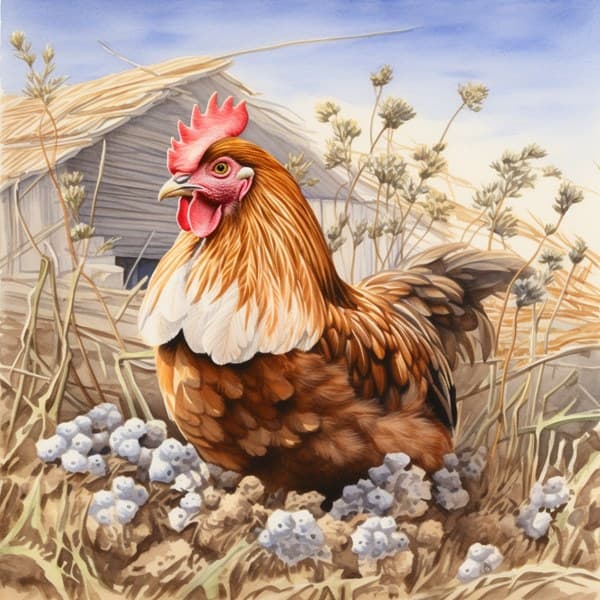
The hen does not scratch because she enjoys foraging. She scratches because the chicks must eat, and their survival depends on her finding what they cannot find themselves. This is the organizing principle beneath Cancer 18: care that has moved past sentiment into pure functional necessity. At eighteen degrees, this placement is not learning what devotion means. It is living inside it, testing its limits, discovering what it actually costs to keep something alive that cannot keep itself alive. The symbol shows a creature locked in perpetual provision, and the psychological tension is this: the more devoted this energy becomes, the more personal needs disappear into the background of attention. This pattern may not even notice when this happens. It scratches. The chicks eat. The day ends. It scratches again.
What makes this degree distinct from early Cancer is that this energy has already chosen this role. This is not the first time the weight of someone else's hunger has been felt. This pattern has done this before, and it will do it again, and somewhere in that repetition, the choice has calcified into a recurring posture. This placement arrives at the same stance: bent toward provision, alert to small signs of need, with personal fatigue as background noise. The failure mode is not a failure to provide. It provides relentlessly. The failure is an inability to distinguish between genuine need and the habit of being needed. This energy may keep scratching long after the chicks have learned to forage. It may create hunger in others simply to justify the scratching. Notice when independence in others is interpreted as abandonment, or when small crises are manufactured to restore purpose.
The trade being protected is this: as long as there is a need to be met, there is no requirement to ask what is actually wanted. Provision is safer than desire. A hen does not have to know her own hunger when she is focused on the hunger of others. This is not weakness. It is strategy. It keeps the self from the more terrifying vulnerability of admitting that needs exist, that those needs might be inconvenient, that one might have to ask. So the posture stays bent. It stays alert. It stays necessary. And the result is a tendency to feel most real, most valuable, and most secure when in service to someone else's survival.
The uncomfortable truth is that this pattern may not actually want to stop scratching. The identity has become too solid. The alternative—a life where one is not essential, where value is not measured in what is provided—feels like erasure. So the pattern keeps finding chicks to feed, keeps finding reasons to bend, keeps finding ways to make devotion look like love when it is actually a way of staying invisible. The pattern will not change because of a simple decision. It will change only when the self notices the scratching and asks: who decided I was the one who had to do this? And then notices how long it takes to answer.