
Cancer 19 Sabian
Gondoliers in a serenade

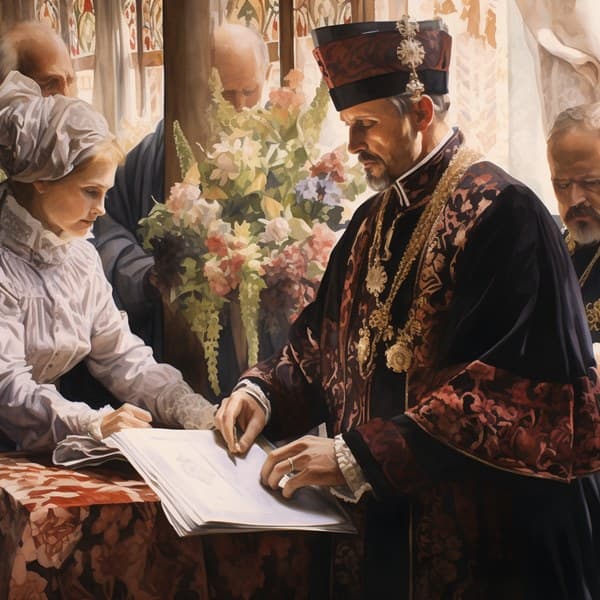
The priest does not create the marriage. He witnesses it, pronounces it, makes it official. The central tension here is between the desire to bless and legitimize connection and the fear that without external authority, intimacy has no weight. You are drawn to the role of consecrator: the one who makes things real by naming them. In Cancer, this is deeply personal. You do not simply want to acknowledge love; you want to be the one through whom it becomes binding. Notice how you often find yourself saying things aloud that others have only felt. You narrate the commitment before anyone asks you to. You turn a quiet moment into a ceremony because silence feels like it might not count.
At nineteen degrees, you are no longer learning the ritual; you are testing whether it actually works. And here the pattern shows its cost. The priest's authority depends on the couple's willingness to be bound by his words. If they resist, if they laugh, if they refuse to repeat the vows, his entire role collapses. You have organized your relational life around being needed as a validator, which means you are constantly vulnerable to being dismissed as unnecessary. You may find yourself over-explaining your feelings to a partner, not because they asked, but because you need them to say yes, to repeat it back, to make it official. You negotiate tenderness as though it requires witnesses. The trade you have made is clear: you get to feel like the architect of intimacy, but you never quite feel like a participant in it.
The priest stands slightly apart. He is present but not equal. He cannot marry himself; he cannot be both the one who blesses and the one who is blessed. This is the loneliness embedded in the symbol. You may spend years being the one who holds the space for others' connections—the friend who listens, the partner who articulates what the relationship means, the person who makes things feel sacred—while remaining oddly untouched yourself. You create ceremonies because ceremonies protect you. They give you a role, a script, a reason to stay close without having to be vulnerable in the same way. When intimacy threatens to become messy or unstructured, you reach for ritual. You suggest the conversation, the dinner, the acknowledgment. You are not wrong to do this. But notice what happens when someone says no to your ceremony. Notice how quickly you withdraw.
What matters now is whether you can be present without needing to officiate. Can you feel something real without narrating it? Can you let someone else's words about you be enough, without correcting them or reframing them into something more official? The next step is not more elaborate ritual. It is staying in the uncertainty long enough to discover that love does not need your permission to be real.



























