Cancer 20 Sabian
A prima donna singing

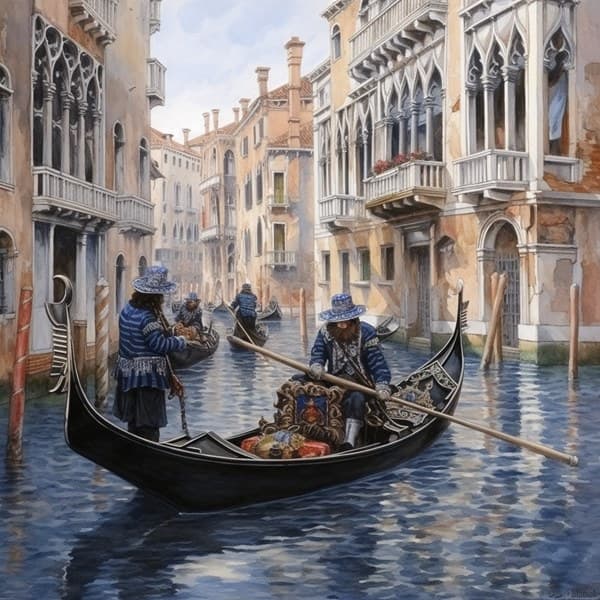
The gondoliers are not alone in the boat. They sing to an audience, to a beloved, to the city itself—performance is woven into the intimacy. This is the central challenge of Cancer at 20 degrees: the belief that feeling deeply and showing that feeling are the same thing. This energy mistakes vulnerability for connection. It arranges emotions like a serenade, complete with timing and witnesses, then wonders why the person being sung to still feels distant. The middle degree of Cancer is where one has learned enough about their own depths to want to share them, but not yet learned that sharing and genuine exposure are not identical. This placement can lead to crafting the perfect text after an argument—not to repair, but to be seen as someone who repairs beautifully. The performance becomes the proof of the feeling.
This symbol reveals a particular kind of emotional labor: the work of making a need for closeness acceptable by making it beautiful. Gondoliers sing because the work is hard and the water is dark and the city is built on drowning. The serenade transforms necessity into romance. This pattern does this constantly. It frames clinginess as devotion. It calls the need to be reassured constantly "depth of feeling." It texts a mother every morning not because she needs it, but because the sender needs her to know they need her. There is real feeling underneath—Cancer always feels genuinely—but the shape it takes in the world is curated. The trade being made is this: exchanging the risk of being rejected for an actual self in exchange for the safety of being admired for an emotional performance. It is a good trade for staying safe. It is a terrible trade for being known.
At 20 degrees, there is enough skill to make this work for a while. People respond to the serenade. They are moved. They believe the performance. But something in this energy knows the difference between being moved and being reached. It notices that the person who hears the most beautiful expression of need does not move closer—they applaud and maintain their distance. This is the exhaustion point. The song has been sung well and changed nothing. The gondolier keeps rowing. The song keeps happening. But the listener never gets in the boat.
What this energy protects against is simple rejection: the possibility that an actual need, unadorned and unmusical, would be too much. So it makes it into art instead. Notice where vulnerability is prepared before it is spoken. Notice where the other person's response has already been imagined before telling them what is actually felt. Notice the moment the version of truth that will land better is chosen. That moment is where the serenade begins, and where genuine contact ends. The choice point is not to stop feeling. It is to risk being felt without the arrangement.
Pay attention today to what is framed as closeness but experienced as performance. There is a difference between singing together and being truly heard. One requires an audience. The other requires silence.