Cancer 23 Sabian
A woman and two men on a bit of sunlit land facing south

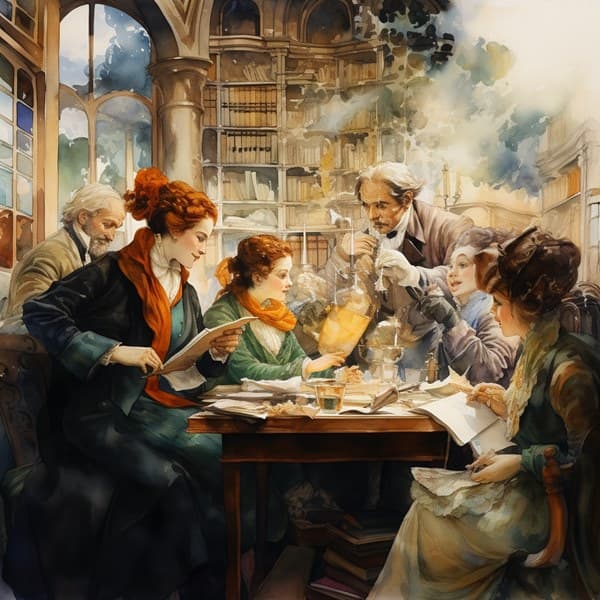
The literary society gathers. Everyone has read the assigned text. Everyone will speak in turn, carefully, with the assumption that words mean something. This is Cancer at its most civilized: emotion transformed into language, feeling pressed into the shape of ideas so it can be shared without overwhelming the room. But at degree 23, something has already happened to this impulse. The society has been meeting for years. The members know each other's arguments before they speak them. What began as genuine exchange has calcified into performance. The comfort of the familiar has become its own trap. You are not here to be changed anymore. You are here to be recognized as the person who always says this particular thing.
Between belonging and stagnation wearing the same face, the central tension is present. Cancer naturally seeks emotional safety through intimate connection, and a literary society offers exactly that: a container where feelings can be discussed, metabolized, made sense of through shared reference. But late-degree Cancer has paid a price for this safety. You have learned to translate your inner life so well that you no longer know what you feel before you have named it. You prepare your thoughts before the meeting. You anticipate which passage will move you. You know which member will cry. The spontaneity that makes genuine connection possible has been replaced by a kind of choreography. When someone says something you did not expect, you feel a small jolt of alarm rather than curiosity. The script has become more real than the people.
This is not a failure of depth. It is a failure of risk. You are protecting something by keeping the conversation predictable: the feeling that you belong, that you are known, that there is a place where your particular sensitivities are not just tolerated but expected. But belonging purchased through predictability is not belonging. It is a deal you made with yourself years ago, and you are still honoring it even though the terms no longer serve you. Notice when you choose the safe interpretation of a text over the one that unsettles you. Notice when you soften your actual response to match what the group has already decided to feel. The literary society is not the problem. Your use of it as a substitute for genuine vulnerability is the problem.
What matters now is whether you can tolerate being misunderstood by people you trust. Whether you can say something that breaks the pattern and stay in the room while they adjust. The society will survive your honesty. It may even deepen. But it will only happen if you stop protecting it by being predictable. The choice point is always here: keep the gathering comfortable, or make it real.