
Cancer 27 Sabian
A modern Pocahontas

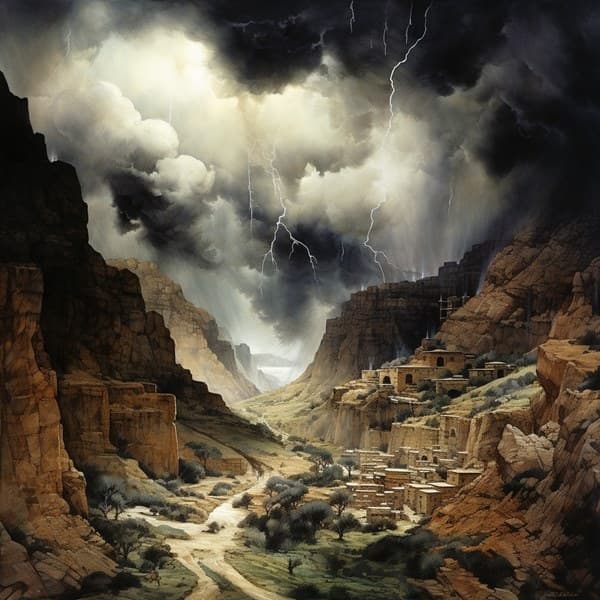
At 27 degrees, Cancer has moved past the work of building emotional safety and entered the territory of what happens when that safety is tested by forces larger than intention. The violent storm in the canyon of expensive homes is not about weather. It is about the collision between what has been protected and what cannot be controlled, between the fortress built and the fact that fortresses fail. By this late degree, this placement knows this. It has already spent the emotional currency of early Cancer trying to secure a private world. Now it is watching it shake.
The expensive homes are not incidental. They represent the tangible proof of emotional labor: the nest built, the stability purchased, the life arranged so that nothing unexpected could enter. Cancer at 27 degrees has usually done this work well. There is a deep knowledge of how to make a home feel like a refuge. There is an ability to anticipate need before it arrives and to soften the edges of the world for those inside the walls. But the storm does not care. It moves through the canyon indiscriminately, and the price of the house becomes almost mockingly irrelevant. This energy can land in a living room during a crisis—a diagnosis, a betrayal, a loss not seen coming—feeling the specific sting of having done everything right and having it mean nothing.
The real tension here is not between safety and danger. It is between the illusion that emotional labor can prevent suffering and the exhausted recognition that it cannot. This placement has spent decades learning to read the room, to sense what others need, to move through the world with antennae extended. This skill has protected the self and those loved. But at 27 degrees, the storm arrives anyway, and there is a forced admission of what has been managed not to be known: that vigilance is not the same as control. One cannot think their way out of loss. One cannot prepare enough. The homes in the canyon are expensive because of the belief that enough care, enough planning, enough presence could buy immunity. The storm reveals the trade made: spontaneity and rest were exchanged for an illusion of safety.
What matters now is not rebuilding the same fortress. The question is whether one can stay present to the storm without trying to manage it into submission. Notice where the impulse arises to reach for a phone to problem-solve when the underlying feeling is fear. Notice where help is offered to others as a way of reasserting control over a world that has just proven itself uncontrollable. The storm will pass. The expensive homes will stand or fall. The task is to stop treating emotional attentiveness as a down payment on a disaster-free life.



























