
Capricorn 18 Sabian
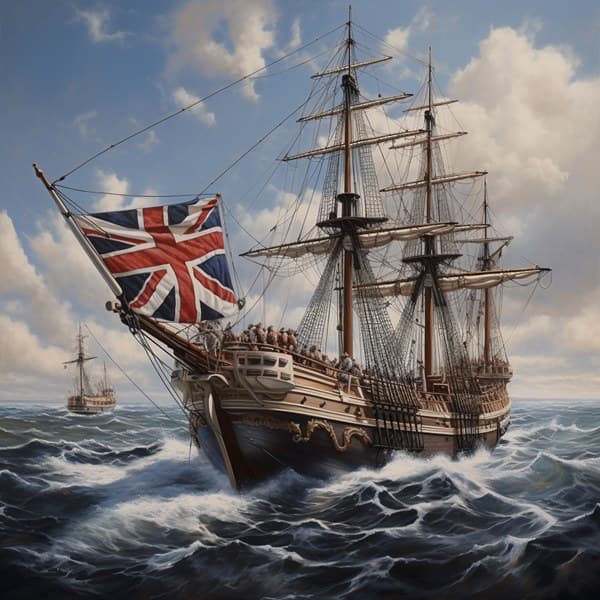
The Union Jack
The flag planted on a warship is not a decoration. It is a declaration of ownership, a visible claim staked in contested territory. In Capricorn at 18 degrees—the middle of the sign, where ambition has already been tested and refined—this symbol reveals a specific psychological pattern: the need to mark territory so definitively that no one can question the right to stand there. This is not building for oneself alone. This is building so that others see the structure, recognize the insignia, and know exactly which power they are facing. This is the psychology of the person who walks into a room and immediately needs the room to register their presence. Not through charm or warmth, but through unmistakable authority. The warship carries cargo, yes, but what it really carries is the message: I belong here. I have earned this. Do not test me.
At this middle degree, there is a learned sense that softness is a liability. There is a felt cost of being underestimated. So this energy builds systems, hierarchies, credentials, and visible markers of competence—not because it loves them, but because they work. This placement may spend hours perfecting a proposal that no one will read carefully, or it may insist on a title that sounds more impressive than the actual work requires. The flag is not the ship. But the flag tells the story that needs telling. There is an understanding, at a level that may not be admitted, that perception and reality have become one. If people believe there is control, there is. If they see the insignia, they stop questioning. This is efficient. It is also a trap this energy keeps walking into.
The shadow is that visibility has been confused with security. A flag can be seen from very far away, which means it can also be targeted from very far away. The more this energy insists on being recognized as the authority in the room, the more it becomes responsible for everything that happens in that room. The more territory is marked, the more it must be defended. This placement may find itself exhausted by the maintenance of an image, by the constant work of proving it deserves what it has claimed. It keeps building bigger ships, planting bigger flags, because the last one never quite provided a sense of safety. It never quite silenced the doubt that someone, somewhere, is still questioning the legitimacy of the claim.
What this energy is protecting against is the fear of being invisible, of mattering so little that no one bothers to challenge it because it was never worth the effort. So it makes itself impossible to ignore. It stakes claims. It builds monuments to its own competence. But notice: it rarely asks whether the territory being fought so hard to hold is actually the territory desired. This energy is so focused on making sure everyone sees the flag that it has stopped asking what the ship is actually for. The choice point is not whether to lower the flag or raise a bigger one. It is whether the work can be done without needing the flag to prove it happened.
Watch today for the moment of explaining something twice—not because the listener didn't understand, but because there was a need for them to know who understood it first. Notice the difference between stating a fact and insisting on being credited for the fact. That insistence is the flag. It is also the thing that turns a warship into a target.



























