
Pallas in 6th House
Intelligence Mistaken for Intimacy
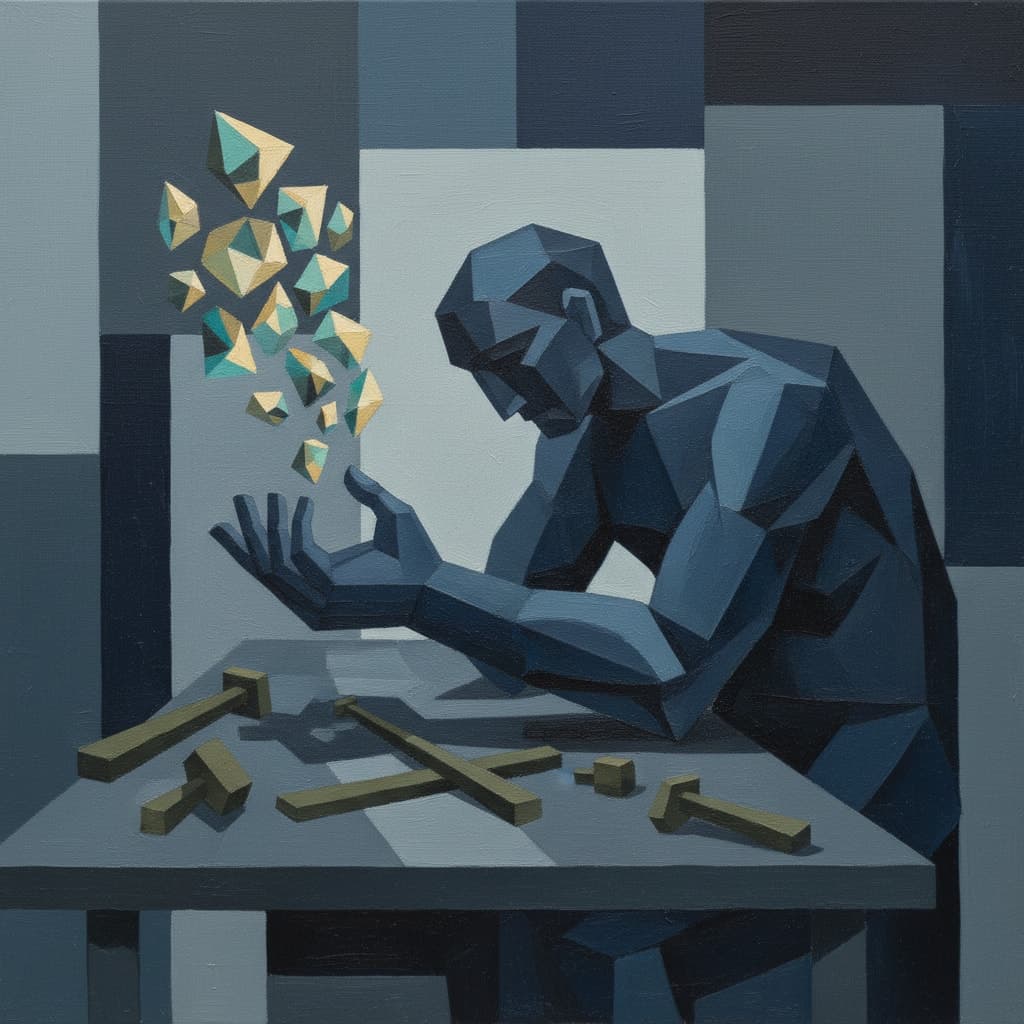
Pallas in the 6th House in synastry places the Pallas person's pattern-recognition and strategic thinking directly into the 6th house person's domain of daily work, health, routine, and practical systems. They see inefficiencies the 6th house person has normalized, gaps in workflow, repeated mistakes, habits that drain energy without serving purpose. This is not criticism offered from distance; it arrives as lived observation, a steady noticing of how things actually function in the 6th house person's ordinary life. The 6th house person experiences this as either clarifying or intrusive, depending on whether they perceive their partner as an ally in their own competence or as a silent auditor of their failures.
The Pallas person finds genuine satisfaction in making systems work better, in teaching through demonstration rather than instruction. They may reorganize a workspace without being asked, notice a pattern in the 6th house person's stress that correlates to a specific time of day or task sequence, or suggest a small change that removes friction from a repeated process. The 6th house person often internalizes this clarity over time, becoming more discerning about their own methods, but the pathway there matters. If the Pallas person offers observation as collaborative refinement, the 6th house person grows. If they treat the 6th house person's methods as a problem to solve, the 6th house person may become defensive or begin to doubt their own judgment. One evening both people sit together to plan a work project, and the Pallas person spots a logical sequence the 6th house person had not seen; the 6th house person feels both relieved and slightly diminished.
Comfort gets mistaken for closeness: this placement can mistake optimization for intimacy, efficiency for care. The Pallas person may slip into perpetual analysis mode, always seeing what could be improved, always one step ahead of the 6th house person's current capability. The 6th house person may internalize a chronic sense of inadequacy, that their efforts are never quite sufficient, that they are being managed rather than partnered with. There is also a risk that the Pallas person's intelligence becomes a form of control: the 6th house person defers to their superior pattern recognition so consistently that they stop trusting their own instincts. Both people learn to distinguish between genuine improvement and unsolicited correction, with the Pallas person recognizing when good enough is good enough. When both people hold this boundary, the partnership becomes genuinely competent: two people who can actually solve problems together and build something that functions reliably.



























