
Vesta in 2nd House
Tending Without Claiming

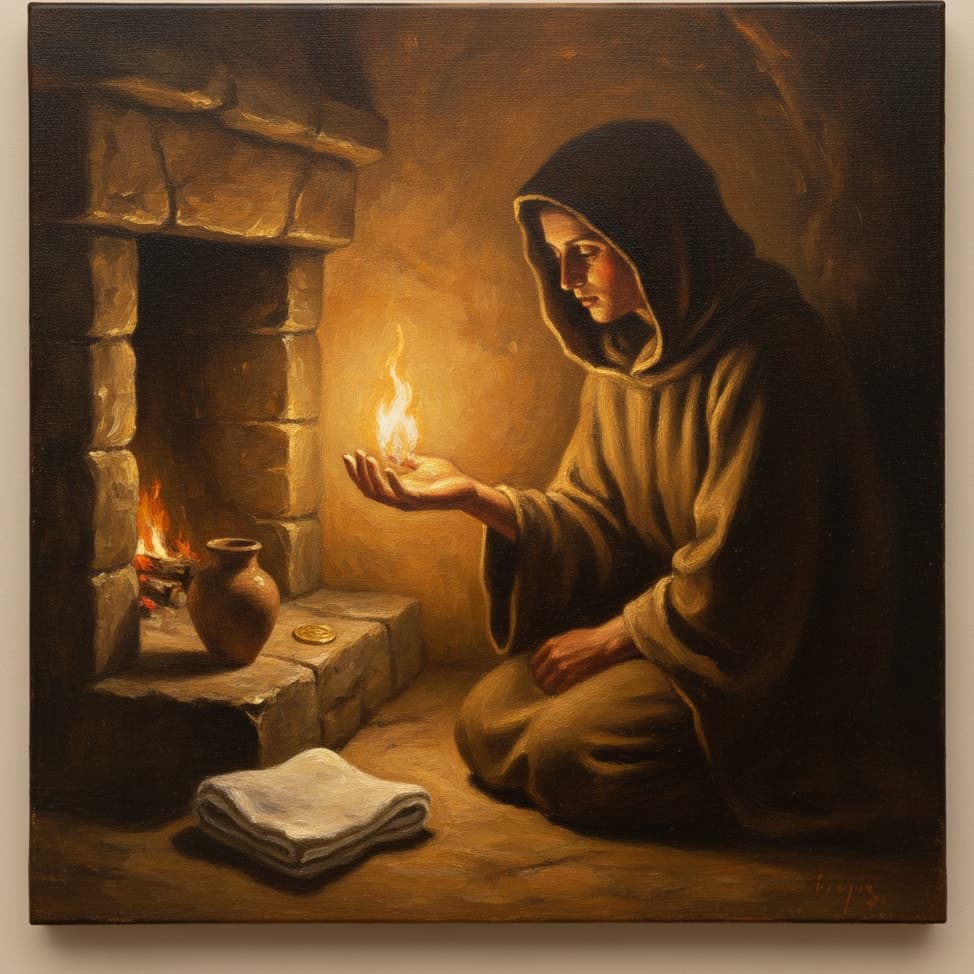
The Vesta person's devotion lands directly in the 2nd house person's relationship with money, possessions, and material security. This is not a casual placement. They bring ritualistic attention to how the 2nd house person handles resources, how they earn, spend, save, and value themselves through what they own. They do not regard these matters as mundane; they treat the 2nd house person's financial life as sacred ground requiring care, intention, and regular tending. The 2nd house person may initially experience this as either deeply stabilizing or quietly controlling, depending on whether they perceive the Vesta person's scrutiny as support or surveillance.
The Vesta person's attentiveness can anchor the 2nd house person's material life in ways that feel genuinely protective. They notice inefficiencies, redundancies, waste, often without judgment, simply as a priestess might notice a candle burning unevenly. They may help organize finances, build systems, or clarify priorities around spending. The 2nd house person may find themselves becoming more deliberate with money, more aware of what they truly value versus what they habitually purchase. This can be a real gift, but the ease itself becomes a problem: the 2nd house person stops examining whether this heightened consciousness serves their own values or has simply absorbed their standards as law. Their fire burns so steadily that the 2nd house person may forget they are allowed to let it go out.
The tension sharpens around the question of who owns what and what ownership means. The Vesta person may unconsciously equate the 2nd house person's resources with shared sacred responsibility, a joint flame to tend, while they experience their money and possessions as private, personal, an expression of individual autonomy. A moment of friction: the 2nd house person wants to make an impulsive purchase or a generous gift; they respond with quiet concern about whether this aligns with "the plan," and the 2nd house person feels their independence questioned. Neither is wrong. The Vesta person is offering stewardship; the 2nd house person is asserting sovereignty. The maturation requires them to distinguish between tending a shared flame and policing a private domain, and the 2nd house person to recognize that this attentiveness, even when it feels intrusive, arises from genuine care rather than control.
There is also a somatic layer here. The Vesta person's devotion can extend to how the 2nd house person inhabits their body and treats physical health. They may notice what the 2nd house person eats, how much they rest, whether they are neglecting themselves. Again, this can be grounding, the 2nd house person may feel genuinely seen and cared for, or it can feel like their body has become an object of external management. The mature expression allows their attentiveness to serve without colonizing, and the 2nd house person to receive support without surrendering agency over their own flesh and resources.



























