Mars Inconjunct Natal Venus
Adjusting desires to find balance


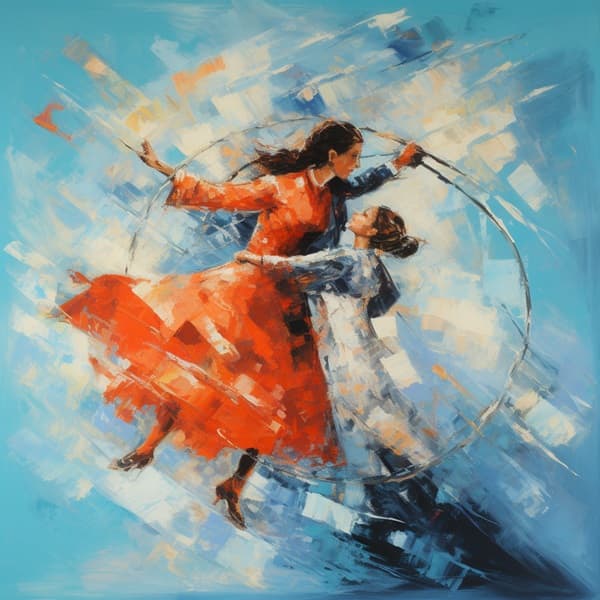
"I am embracing the delicate dance of asserting my individuality and maintaining a healthy balance within my relationships."
Mars Inconjunct Natal Venus Opportunities
- Expressing yourself freely and creatively
- Balancing your individuality and relationships
Mars Inconjunct Natal Venus Goals
- Navigating the delicate dance
- Finding harmony within yourself
Transiting Mars inconjunct your natal Venus creates a mismatch between what you want to do and what feels relational or attractive. Mars is directional and self-assertive; Venus is receptive and calibrated to harmony. During this transit, these two functions suddenly need to negotiate, and the result is often awkwardness, you move forward and something in you registers that the move may cost connection, or you soften toward someone and feel your own momentum drain away.
The inconjunct does not produce conflict so much as misalignment. You may find yourself saying yes to your own desire and immediately feeling the weight of someone else's needs, or choosing consideration and then resenting the constraint. This is not a moral failure; it is the geometry of the aspect itself. The two planets are not in opposition (which would at least be clear), nor in harmony (which would flow). They are at an angle that requires constant small adjustments, like steering a car with uneven wheel alignment. You say yes before checking what the yes will cost, or you choose safety and then feel trapped by your own caution.
The practical dimension emerges when you name the mismatch rather than trying to resolve it into unity. Mars and Venus do not need to agree; they need to take turns. In this period, notice when you are pushing forward at the expense of attunement, and when you are attenuating yourself to preserve connection. Neither is wrong. The transit asks you to see the pattern clearly, to recognize the moment you choose speed over relationship, or relationship over self-direction, so that the choice becomes conscious rather than automatic. Communication helps, not because it creates harmony, but because it makes the tension visible and negotiable instead of hidden and resentful.
Sexuality and creative energy may feel scattered or self-conscious while this is active. You have the impulse but not the ease. This is not a time to force integration. Instead, work with what wants to move and what wants to connect as separate functions, taking them seriously each in turn rather than demanding they operate as one.