
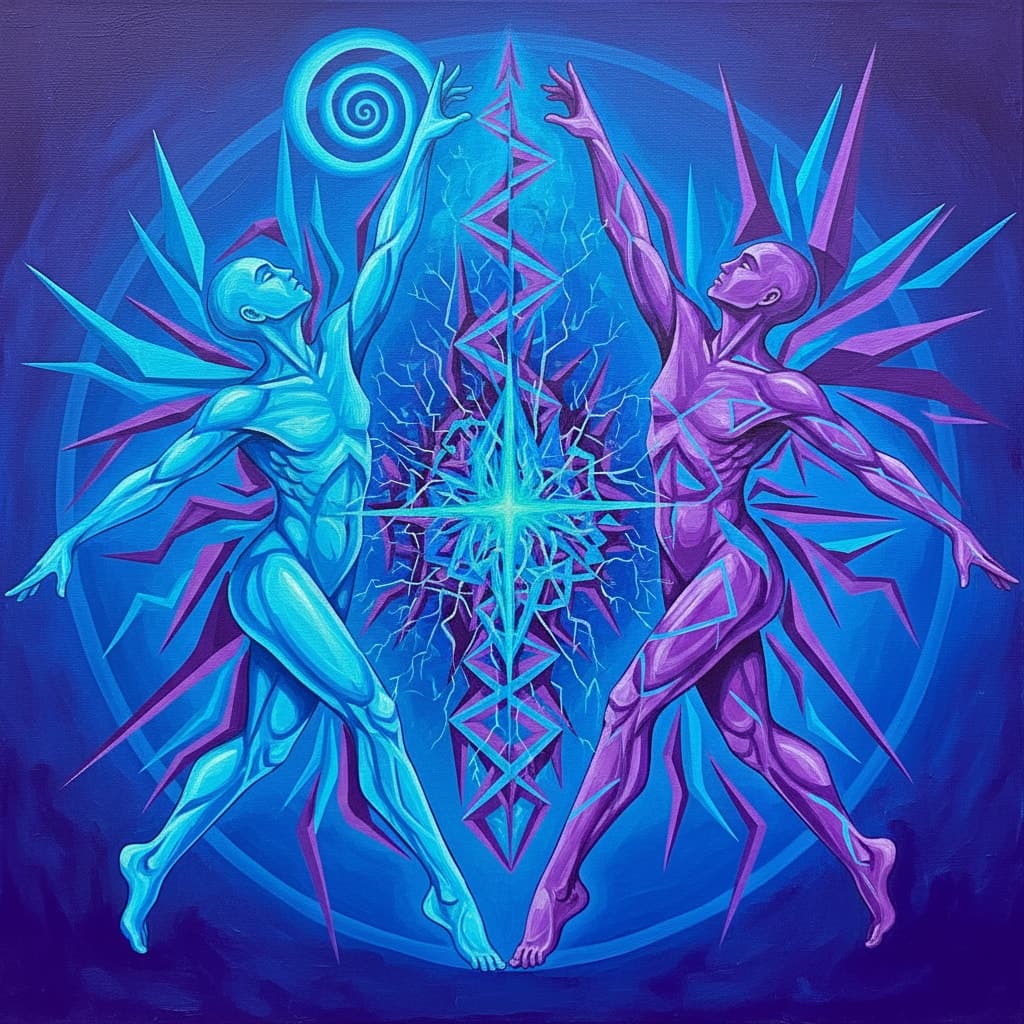
Composite Part of Fortune square uranus
Fated and Fractured


"I am open to the unexpected twists and turns in life, knowing they hold hidden treasures and blessings for my journey."
Composite Part of Fortune square uranus Opportunities
- Exploring fresh perspectives and possibilities
- Embracing change and growth
Composite Part of Fortune square uranus Goals
- Embracing change and growth
- Finding hidden blessings and treasures
Part of Fortune square Uranus in composite does not promise a relationship blessed with serendipity. It describes a couple organized around the collision between what feels fated or necessary and what refuses to stay still. Disagreement between fate and freedom is not merely an abstract concept. It is between two people who experience luck, timing, and "what should happen" in fundamentally incompatible ways. One partner may feel the relationship is building toward something; the other may feel trapped by that very narrative and need to break it. This is not a problem to solve through flexibility. It is the architecture of how both people meet.
The Part of Fortune in composite points to shared purpose, the things that feel like they were meant to align. Uranus in hard aspect to it does not soften that alignment. It destabilizes it. What both people recognize as "ours" keeps getting interrupted by sudden insight, by one person's need to overturn assumptions, by external circumstances that force a different path. Both people may find themselves planning together, then one person acts unilaterally—not from malice, but from a genuine conviction that the plan itself was the cage. The other experiences this as betrayal of something both people had agreed was real. Both people are right. The relationship keeps asking both people to choose between honoring what they built together and honoring what refuses to be built.
This aspect often produces couples who are either constantly reinventing themselves or constantly at odds over whether reinvention is necessary. Both people may stay together through repeated small ruptures, each one forcing a renegotiation of what the relationship actually is. Some couples do this well: they become skilled at letting go of outdated versions of the partnership and moving into the next thing. Others exhaust themselves. The exhaustion comes not from the changes themselves, but from the fact that one person experiences each change as a loss while the other experiences it as liberation. Both people may tell themselves they are embracing growth when they are actually just tolerating each other's incompatible relationships to time and commitment. Notice when both people call it flexibility and it is actually just resignation.
What matters is whether both people can name the actual dynamic: one person experiences shared purpose as real and binding; the other experiences it as a story that needs breaking. Neither is wrong. The question is not how to make the aspect work. The question is whether both people can stay conscious that they are choosing each other despite this, not because some aspect promises it will feel easy. During the next conversation about the future, notice who is planning and who is already looking for the exit.



























