
Composite Ascendant Opposition Moon
Visible and Hidden, Never Synchronized



"I have the power to balance my own desires and needs with the energy of my relationships, creating a fertile ground for growth and self-discovery."
Composite Ascendant Opposition Moon Opportunities
- Balancing personal desires and needs
- Navigating independence and connection
Composite Ascendant Opposition Moon Goals
- Balancing personal desires and needs
- Honoring individual needs while nurturing connection
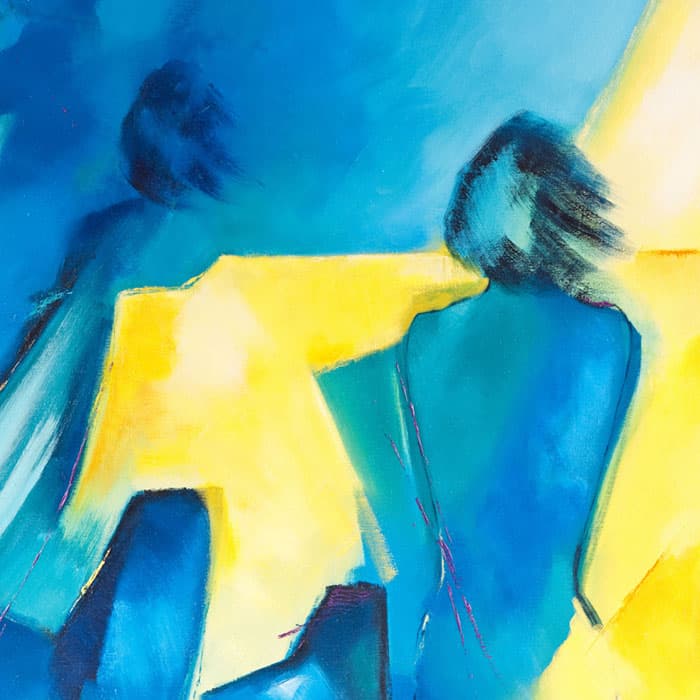
Composite Ascendant opposition Moon describes a relationship structured around perpetual misalignment between presentation and feeling. The couple's outward face and inner emotional life operate on different frequencies, creating a relational rhythm where one person's natural movement activates the other's resistance. This is not dysfunction to repair but the foundational tension the partnership is organized around.
The mechanism is direct: one partner moves toward external clarity, action, social engagement, definition of self and intention. The other moves toward internal process, mood, intuition, what resists being named or resolved. When the outward-moving partner acts decisively, the inward-moving partner experiences it as pressure or abandonment of emotional nuance. When the inward-moving partner retreats into feeling, the outward-moving partner reads it as withdrawal or refusal to commit. The couple finds itself in a recursive loop: one person is always explaining, the other is always processing, and both feel chronically misunderstood. A simple disagreement becomes a clash between two different definitions of what "being together" means, one requiring action and visibility, the other requiring space and emotional permission.
This opposition creates a specific public-private fracture. The Ascendant is the relationship's face to the world; the Moon is its hidden temperature. The couple often projects one story while living another. One partner may appear engaged and certain while the other is quietly drowning. One commits enthusiastically while the other is still testing whether the ground is safe. Observers see stability; inside, both people are managing separate emotional realities. The relationship can look chaotic publicly while one partner is desperately trying to hold emotional ground, or appear seamless while feeling fractured within. There is rarely a synchronized moment where both people are equally present in the same register.
The real cost is not the tension itself but what the tension permits: both people can remain partially hidden. One partner stays in motion, defining the relationship through intention and action without full emotional exposure. The other stays in feeling, resisting being known or made to perform. Neither surrenders completely. Neither is fully seen. The partnership functions as a kind of mutual permission to not arrive fully. This can feel like freedom or like quiet isolation depending on the moment. When one person finally stops trying to bridge the gap and accepts that they are not built for the same kind of intimacy, something shifts, not into harmony, but into a clearer loneliness or, occasionally, into genuine acceptance. The difference between those two outcomes lives in whether both people consciously choose the structure they are already living.
The relational work here is not to resolve the opposition but to stop pretending it isn't there. Both people must learn to notice which one is moving first and which one is following with resistance. Both must recognize that one knows how to present and the other knows how to feel, and that these are not the same skill. The dynamic becomes workable not when they meet in the middle, but when both people stop expecting the other to translate their native language and instead learn to recognize each other's dialect as legitimate. That recognition requires the outward-moving partner to slow down enough to notice what the inward-moving partner is actually saying through withdrawal. It requires the inward-moving partner to trust that the other person's forward motion is not abandonment but their way of staying alive. The opposition then becomes not a barrier to intimacy but a specific kind of intimacy, one built on accepting that true meeting sometimes means standing in different rooms and still knowing the other person is there.


























