Draconic Uranus in Taurus
Destabilizing What Holds


Draconic Uranus in Taurus describes a soul already organized around a fundamental paradox: the need to destabilize what appears solid, and the simultaneous refusal to leave ground. This is not a placement learning to innovate or embrace change. This is a soul that was never built to accept value systems as given. You arrive already skeptical of inheritance—not from rebellion, but from something deeper. You see through the architecture of what others call permanent. A person with this placement notices, at age seven, that the family's certainties are constructed. By thirty, they are still noticing. The pattern is not something to develop. It is the lens itself.
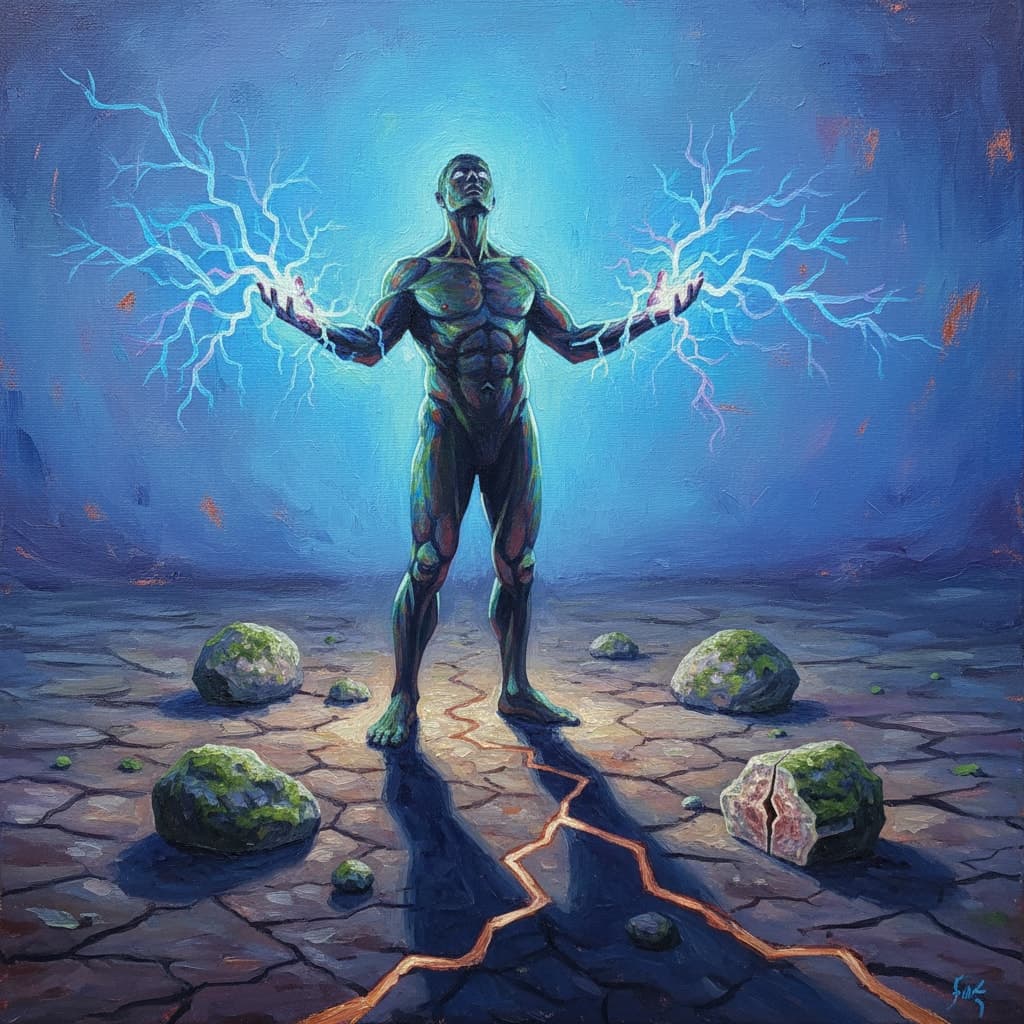
The central tension is this: you cannot leave the material world, yet you cannot settle in it. You need solid ground to stand on while you dismantle it. Watch yourself in relationships with money, property, or tradition. You may spend years building something—a career, a home, a reputation—with meticulous care, then recognize it as a cage and begin the work of escape. Not because the structure failed. Because you were always going to outgrow it. The trade you are protecting is safety. By understanding systems deeply before you reject them, you get to feel in control of the dissolution. You are not fleeing blindly. You are leaving with full knowledge of what you are leaving behind. This distinction matters to you more than most people understand.
Where this placement fails is in its refusal to accept that some structures exist for reasons that survive scrutiny. You are prone to mistake durability for corruption. A tradition that has held for generations reads to you as proof of obsolescence, not wisdom. You may dismantle support systems before you have built alternatives, then wonder why you are standing in rubble. The discomfort: you know this about yourself and do it anyway. You rationalize it as necessary. Sometimes it is. Sometimes you are simply afraid of becoming what you see your parents became—settled, complicit, small. The fear is so old it feels like truth.
Notice where you call reconstruction "freedom." Notice where you leave before you have finished building. The next choice is not whether to question the foundations. It is whether to stay long enough to know what you are actually building when you rebuild.