
Aries 15 Sabian
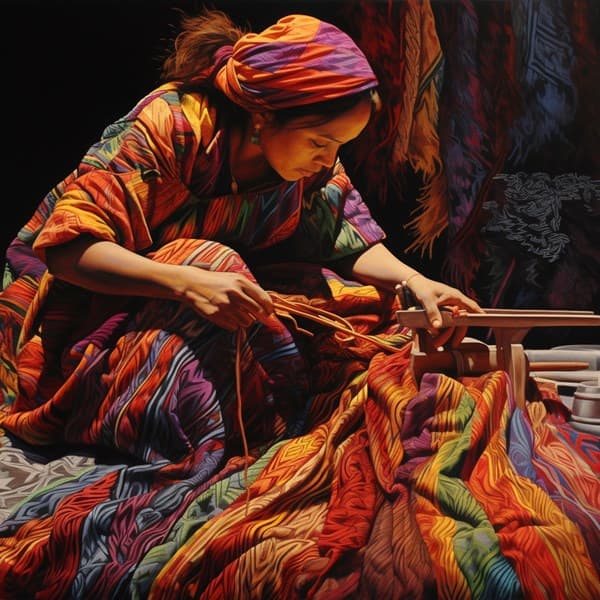
An Indian weaving a blanket

The weaver's hands move across the loom in a pattern he has already decided. The blanket emerges thread by thread, each color placed where intention determined it would go. This is Aries at fifteen degrees: not the raw impulse to begin, but the committed body in the middle of its own design, testing whether the pattern will hold. The central tension is between the will that initiates and the discipline that sustains. The weaver cannot simply decide and move on. He must stay, must repeat, must let his hands learn the same motion until the blanket is finished. The loom is his evidence that impulse alone is not enough.
What the image reveals most clearly is that force and constraint are not opposites here; they are the same gesture. The weaver does not experience the loom as a limitation on his will. He experiences it as the only place his will becomes real. His hands pull the thread tight because tightness is what makes the blanket hold together. This is the Aries lesson at the middle of the sign: aggression and discipline are the same action viewed from different angles. You may mistake your own rigidity for strength. You may keep your hands moving in the same pattern, day after day, and call it commitment when it is actually fear of what happens if you stop. The blanket grows because you do not deviate. But you have also stopped asking whether this is the blanket you meant to weave.
The Indian weaver knows something about persistence that the person who only has impulse does not know. He has already failed at something. He has already seen what happens when the thread breaks or the pattern goes wrong. His body carries that knowledge. This is why he does not rush. The degree fifteen sits in the middle of Aries' season, past the first wild thrust forward, far enough in that consequences have arrived. The weaver's concentration is not the concentration of someone discovering his power for the first time. It is the concentration of someone who has learned that power requires him to show up the same way tomorrow. Notice where you keep your hands moving in a pattern you no longer question. Notice where you have confused repetition with loyalty.
What you are protecting by staying at the loom is not the blanket. It is the identity of being someone who finishes what he starts. That identity is real and it matters. But it has also become a prison you do not admit you are in. The weaver could set down his work and walk away. The loom would not stop him. He does not leave because leaving would mean admitting that the will that began this project is not the same will that sustains it. One is hot and certain. The other is cold and repetitive. The pattern you keep pulling tight is the pattern that keeps you from feeling the difference between those two kinds of will. The next time you feel yourself pushing harder to stay committed, ask yourself whether you are actually moving forward or simply holding your ground.

























