Aries 16 Sabian
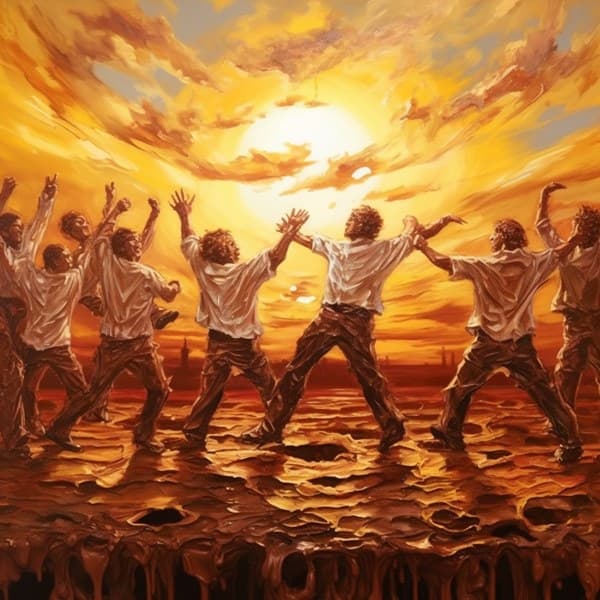
Brownies dancing in the setting sun

The brownies are dancing. They are small, mythic figures, and they are doing this in the setting sun—not the rising sun, not noon light, but the hour when brightness is already leaving. This is Aries at 16 degrees, the middle of the sign, where raw impulse has learned to move but hasn't yet learned to stop. The central tension is between the frenzy of motion and the fact of diminishment: the light is going, and they dance anyway. The dance is not a response to the light. It is a defiance of its departure, or a refusal to notice it, or both at once. The brownies' small size matters. They are not commanding the landscape. They are animated within it, possessed by something—by the setting, by the hour, by an urgency that does not require permission or an audience. This is what Aries at 16 looks like when it has moved past simple assertion into something more complicated: the drive to move, to act, to animate the moment, even as the moment is already fading.
The setting sun creates a specific psychological condition. It is not darkness yet, so there is still visibility, still the possibility of being seen. But the quality of light is changing. Colors are deepening. Shadows are lengthening. The brownies dance in this amber, diminishing radiance, and their movement becomes a kind of argument against the fading. You know this pattern: you accelerate when you sense something ending. You text faster, laugh louder, make plans more urgently when you feel the other person pulling away. You fill silence with motion. The brownies are doing this with their entire bodies. They are not mourning the sunset. They are not preparing for darkness. They are dancing as if the light will last if only they move fast enough, bright enough, with enough vitality. This is the failure mode of Aries at this degree: the belief that intensity can halt time, that enough action can prevent loss.
But there is something else in the image that complicates this reading. The brownies are mythic. They are not human. They operate by different rules. In folklore, brownies are creatures of threshold spaces—barns, hearths, the edges of human settlement. They work at night. They are most themselves in darkness and in the margins. So the setting sun is not actually a crisis for them. It is an invitation. Their dancing in the fading light is not desperate acceleration toward a human ending; it is a tuning toward their own proper hour. The tension becomes sharper: Aries at 16 is testing whether its drive to move and act is actually its own or whether it is a reaction to external conditions—to what is expected, to what is visible, to what others can see and approve. The brownies know something about this. They dance when the light is leaving because that is when they are most alive. When you stop performing for the visible world, what do you actually want to do?
This is the question that arrives at 16 degrees of any sign: you have learned the basic moves, and now you must discover whether you are moving toward something or away from something. The difference is everything. Aries often cannot tell the difference because both feel like motion, both feel like aliveness. You may spend years moving away from boredom, away from judgment, away from the feeling of being trapped—and call it ambition. You may fill your days with projects and intensity and the sensation of going somewhere, and never ask whether you are actually going toward anything you want or simply running from what you fear. The setting sun reveals this. In fading light, your reasons become visible in a way noon light obscures. Notice what you do when no one is watching. Notice what you accelerate toward when external validation is no longer available. The brownies are still dancing. The question is whether you know why.
What matters now is whether your motion is yours. Not whether it is productive, not whether it impresses, not whether it fills the space before darkness arrives. Aries at 16 has enough skill to make motion look intentional. You have learned to move with confidence. The real work is noticing the difference between the dance you do because you must and the dance that is actually alive in you. The setting sun will come whether you accelerate or not. The question is what you choose to do in that light while it lasts.