
Aries 28 Sabian
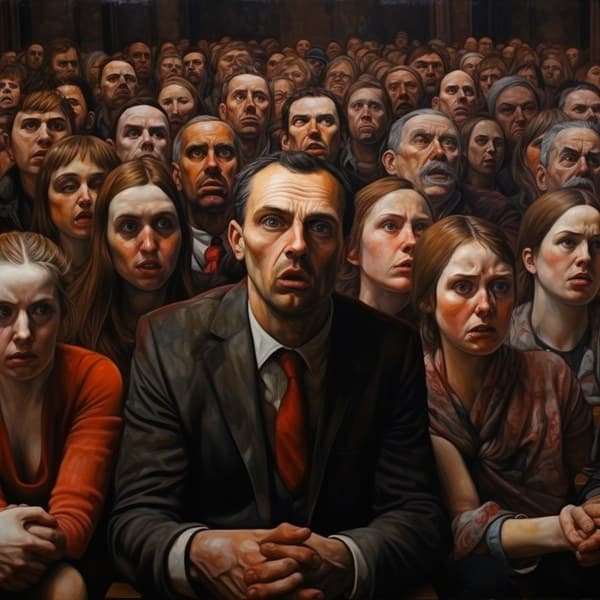
A large disappointed audience


This placement has learned what it means to perform for people who will not be satisfied. This is not a new lesson. By degree 28 in Aries, this energy has already spent itself on the task of convincing, impressing, proving worth through action and visibility. The disappointed audience is not a failure this placement is trying to prevent. It is the logical end of a pattern running since the decision that value lived in others' reactions. The feeling is familiar: the energy moves, acts, pushes the initiative forward, and the room stays unmoved. The applause does not come. Or it comes too quietly. Or it comes and there is no feeling because the calculation of what would disappoint them next was already underway.
The central trap here is that a crowd that expects nothing cannot be disappointed. So the stakes keep rising, the pace keeps quickening, and the effort to engineer the exact moment when they will finally feel what you feel continues. There may be late nights refining a presentation that will change their minds, or pushing a project past its natural end because stopping feels like admission. Silence may be read as judgment and every neutral response interpreted as rejection. The exhaustion is real. By this degree, the effort has become its own punishment. The chase is no longer for approval. It is a chase for the moment when the need to chase finally stops. That moment never arrives because the entire sense of aliveness has been built around the chase itself.
What this energy is protecting against is stillness. If there is no performance, no generated momentum and visible proof of existence, then perhaps existence itself feels at risk. The disappointed audience confirms that there was an attempt, that there was a showing up, that there was enough mattering to let down. Invisibility would be worse. The nervous system has been organized around the belief that being seen—even being seen as a failure—is the only alternative to disappearing. Notice where criticism is interpreted as connection and indifference as death. Notice where the movement continues not because the direction is right, but because stopping would require facing that the audience's disappointment may have nothing to do with you.
The choice at this degree is not to finally win them over. It is to stop performing for the room and notice what is actually desired. This is harder than it sounds because it requires sitting with the possibility that actions might matter to no one but yourself—and that this might be enough. The next time the familiar push to convince, to prove, to move faster arises, pause and ask what is being protected against by staying in motion. The answer will show what needs to change.

























