Cancer 5 Sabian
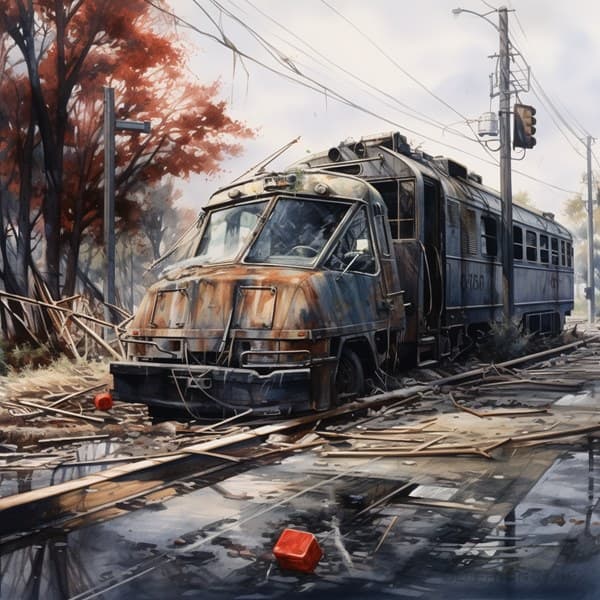
An automobile wrecked by a train


The collision at the railroad crossing is not about accident or fate. It is about the moment when two incompatible speeds meet, and something has to give. In Cancer at 5 degrees, this is the raw territory where emotional need crashes into external constraint, where the wish to move forward collides with a force too large to negotiate with. The automobile is small, personal, driven by individual will. The train is massive, on its own schedule, indifferent to the car's trajectory. This is the early Cancerian experience: the discovery that feeling deeply does not protect you, that vulnerability does not stop the world from moving according to its own logic.
The psychological organization here is reactive rather than reflective. When this symbol is active in you, you tend to move toward emotional situations without calculating the cost, then experience shock when the impact comes. You may find yourself suddenly flooded with resentment after weeks of accommodating a partner's needs, as if the train appeared without warning. Or you may commit intensely to a relationship or project, only to have circumstances—a job change, a family crisis, someone else's decision—derail your plans entirely. The wreck is not gradual. It happens at the crossing, at the exact moment when you cannot turn back and the other force cannot stop. You live in the space between those two impossibilities.
What protects you through this pattern is the very thing that makes it dangerous: your refusal to harden. You stay open, stay available, stay emotionally present even after being hurt. This is not resilience. It is a particular kind of vulnerability that keeps you returning to the crossing, convinced that this time you will time it right, that you will feel your way through instead of colliding. The trade is this: you avoid the cold calculation that might keep you safe, and in exchange you stay capable of deep feeling. But you pay for it in wreckage.
The failure here is not weakness but a specific blindness. You do not see the train coming because you are focused on your own momentum, your own need to move forward emotionally. You mistake your intensity for sight. When the collision happens, you are genuinely surprised, and then you interpret the wreck as proof that you felt too much, loved too hard, needed too deeply. You do not interpret it as evidence that you were not paying attention to forces larger than your own desire. Notice where you confuse emotional authenticity with emotional wisdom. The next time you find yourself accelerating toward a crossing, stop and listen for the whistle.