Gemini 21 Sabian
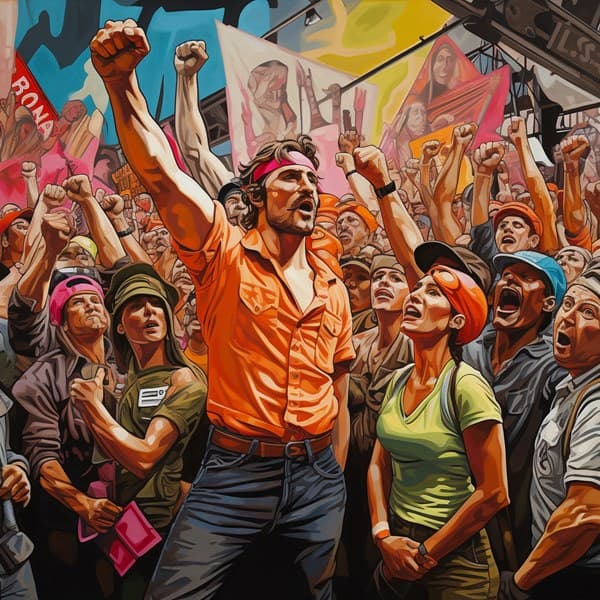
A labor demonstration


At Gemini 21, the labor demonstration has already happened. The tumult is not building—it is the aftermath of something that demanded to be voiced, and now you are living inside the noise it created. This is not the raw fury of early Gemini degrees, where words explode without knowing their shape. This is Gemini at the edge of its season, where communication has become a tool worn smooth by use, and the question is no longer whether to speak but whether speaking actually changed anything. The central tension is between the need to make noise and the growing suspicion that noise alone is not transformation. You may find yourself in cycles where you articulate a grievance brilliantly—to friends, online, in meetings—and then feel oddly hollow when the articulation ends. The words were perfect. The logic was sound. Nothing moved.
The labor demonstration is fundamentally about collective voice meeting immovable structure. But at degree 21, you are tired. You have already marched, already chanted, already made the case. The tumult now lives inside you as a kind of restless knowing: that speaking and changing are not the same thing, that being heard is not the same as being healed. This manifests as a particular form of exhaustion in how you argue. You may notice yourself preparing counterarguments before the other person has finished speaking, not out of aggression but out of a deep fatigue with the possibility that words will fail again. You document everything. You build airtight cases. You become the person who knows exactly what you should have said three days ago, and you will say it perfectly the next time—except the next time never quite arrives, or it arrives and the other person still doesn't understand. The trade you are making is clarity for connection: you have sacrificed the messy, uncertain intimacy of not-knowing what to say in order to never be caught without a response.
What the symbol reveals is that at this late degree, the demonstration has become a habit of mind rather than an authentic response to injustice. You may find yourself performing the role of the one who speaks truth, who refuses to stay silent, who will not accept the comfortable lie. But performance is not the same as conviction. You notice this when you catch yourself explaining your position to someone who did not ask, or when you realize you are more invested in winning the argument than in understanding the person across from you. The tumult that once felt like necessary disruption now feels like a script you cannot deviate from. You are exhausted by your own rightness.
The question at this degree is not whether to keep speaking. You will keep speaking. The question is whether you can tolerate being wrong, being uncertain, being unheard without it triggering the need to make more noise. Notice when you reach for explanation as a way to avoid the rawness of simply not knowing what happens next. The labor demonstration taught you that your voice matters. What it did not teach you is that sometimes mattering is not enough.