Gemini 22 Sabian
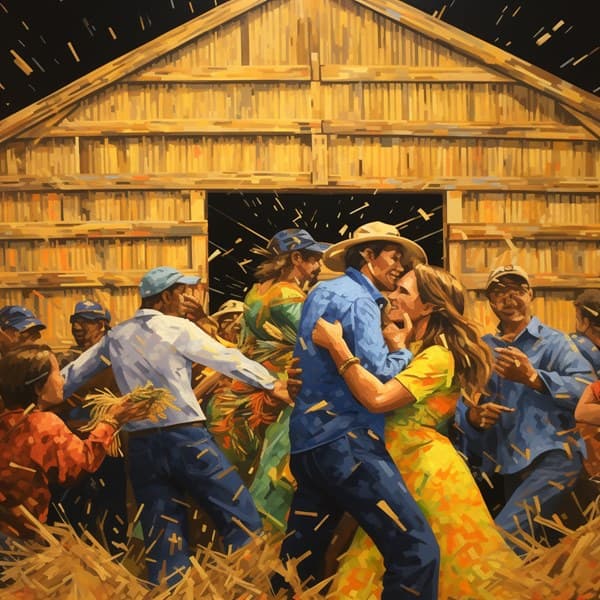
A barn dance


At twenty-two degrees into Gemini, the barn dance reveals something the early degrees of connection could not yet see: the pleasure of belonging has already begun to calcify into performance. The couples move in patterns everyone recognizes. The harvest is in—the work is done—and now there is only the ritual of celebration, the muscle memory of joy. You know the steps. Everyone does. What felt spontaneous at the beginning of the season now feels like a script you are reading aloud while watching yourself read it. The central tension is not between isolation and connection; it is between being genuinely present in a crowd and the slow erosion that happens when presence becomes habit.
This degree specializes in a particular kind of exhaustion: the exhaustion of fitting in so well that you forget there was ever a choice. You show up to the gatherings. You dance when the music plays. You laugh at the right moments and ask the expected questions. The barn is warm. The company is familiar. But somewhere in the middle of the evening, you notice you are counting the minutes until you can leave, not because you dislike these people, but because you are tired of the performance of liking them. You may find yourself standing slightly apart from the crowd, still smiling, still present—but now you are observing the dance rather than dancing. This is not cynicism. It is recognition. The trade you have made is this: you exchanged the risk of genuine disconnection for the safety of perpetual surface connection, and now you are paying the price of that safety in a currency you did not anticipate: boredom.
The failure mode of this degree is the slow accumulation of resentment disguised as loyalty. You keep showing up. You keep performing the role of the engaged participant. But the energy that once felt like generosity now feels like obligation, and you have begun to resent the very people you are obligating yourself to. You may notice yourself making cutting remarks dressed as jokes, or withdrawing emotionally while remaining physically present—sitting at the table but not quite at the table. The barn dance becomes a place where you practice a kind of sophisticated loneliness: surrounded by people who think you are happy. The question is not whether you should leave the barn. The question is whether you can stay without disappearing.
What you are noticing now is available to you always: the moment when connection becomes performance is the moment you have the choice to name it. You do not have to keep dancing the same steps. You do not have to leave either. You can change the pattern while you are still in the crowd—speak differently, ask a real question instead of the expected one, move to the edge and stay there without pretending to be happy about it. The couples around you will continue their familiar movements. That is their choice. What matters now is whether you will continue to mistake the comfort of the familiar for the presence you actually want.
Notice where you are still dancing because everyone expects you to, not because the music moves you.