
Gemini 29 Sabian
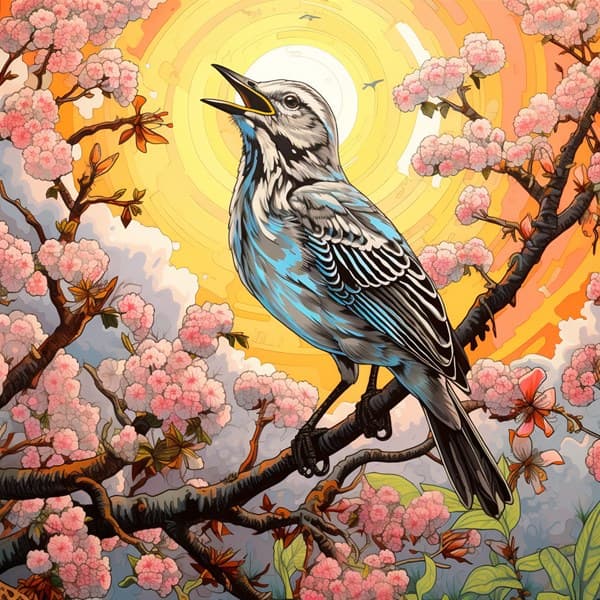
The first mockingbird in spring
At the end of Gemini, speech has become something else: not communication but performance, not connection but announcement. The mockingbird does not sing to be understood. It sings because the season has turned, because its throat knows what to do, because the impulse arrives and must be released. This is what happens when words have been used up—when you've already said the thing seventeen ways, explained yourself to people who weren't listening, defended positions you no longer hold. At 29 degrees, Gemini is exhausted from trying to land meaning. The mockingbird sings anyway. It does not wait for the right audience. It does not check whether anyone is paying attention. It sings from the treetop, where no one asked it to sing, in a voice that belongs to everyone and no one.
The mockingbird's gift is mimicry—it absorbs the songs of other birds and returns them transformed, unattributed, woven into its own voice until the original source disappears. This is what happens to you at this degree: you have internalized so many conversations, absorbed so many perspectives, tried on so many ways of speaking that you no longer know which words are yours. You may find yourself mid-sentence, aware that you are channeling your mother's phrasing, your ex's logic, a podcast you heard three years ago. The boundary between your voice and the voices you've collected has worn thin. You speak fluently in a language that is partly borrowed, partly invented, and you have stopped trying to sort which is which. This is not dishonesty. It is the natural outcome of a mind that has spent its season collecting, comparing, and recombining everything it touches.
But there is a cost to this dissolution of authorship. The mockingbird at the end of spring is not singing to build a nest or attract a mate—those purposes belong to earlier in the season. It is singing because the mechanism is wound tight and must release. You may recognize this in yourself as the urge to speak that has nothing to do with being heard: the long text message you send at 11 p.m. and delete before morning, the story you tell at a dinner party that no one asked for, the opinions you voice in situations where your opinion changes nothing. The speech has become separated from its outcome. You are performing meaning rather than making it. And you have started to notice the performance, which is its own kind of exhaustion.
What the mockingbird reveals is the trap at the end of the mental sign: the more fluent you become, the less certain you are of your own ground. You can argue any side. You can see the validity in every perspective. You can speak beautifully about things you do not believe. This flexibility, which was Gemini's great strength in the middle degrees, becomes a kind of vertigo here. You may sit silent in situations where you would once have chattered, not because you have nothing to say but because you have too many versions of what to say and no way to choose. Or you may do the opposite: talk more, faster, louder, as though volume could substitute for conviction. The song from the treetop is heard by everyone passing below. It changes nothing. It simply marks that the season has turned and something in you knows it, even if you cannot name what comes next.
The work is not to recover some "authentic" voice buried under all the borrowed language. That voice was never separate. The work is to notice when you are singing because you must and when you are singing because you are afraid of silence. Notice where you perform fluency instead of risking uncertainty. Notice the text you delete. Notice the opinion you voice that you do not actually hold. The mockingbird does not choose its season. You do choose whether to keep singing past the moment when singing served you.
























