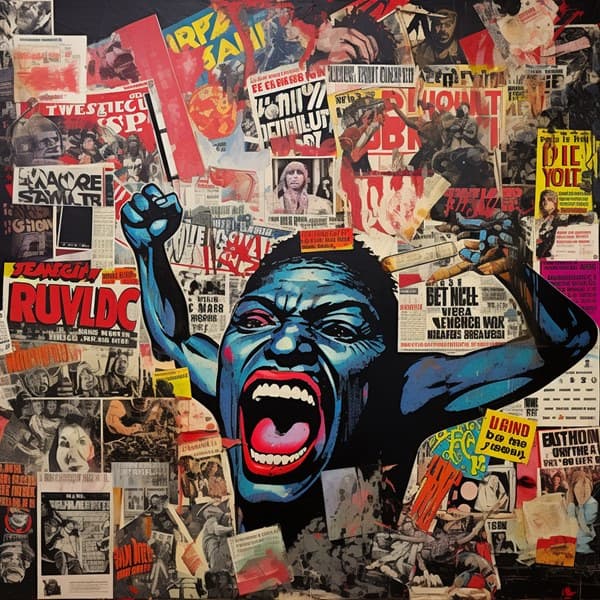
Gemini 5 Sabian
A radical magazine


The central tension here is between the urgency to communicate and the question of whether what you're saying has substance. At Gemini 5, you are at the raw beginning of the sign's gift for language and connection, but the symbol shows you arriving already inflamed: a magazine demanding action, its front page designed to provoke rather than to inform. This is the impulse before the thought. You feel the need to alert, to wake others up, to make noise about what you've noticed. The problem is not your perception. The problem is the gap between what you actually know and what you feel compelled to broadcast. You may find yourself sending urgent messages, launching ideas in half-formed states, or positioning yourself as the one who sees what others miss. The sensational front page is not a lie exactly. It is a selection. It is the loudest part of a quieter story, arranged to demand attention before anyone has decided whether attention is warranted.
What organizes this pattern is the trade between being heard and being right. You have learned that volume works. That provocation creates response. That if you frame something as urgent, people move. So you do it. You text in all caps about something that bothers you. You send the article with a furious preamble. You open conversations with the most inflammatory version of what you think. Part of you knows this is a tactic. Another part of you has come to believe that if you don't present things this way, they won't land at all. The magazine's sensational cover is not dishonest reporting. It is the fear that the truth alone won't be enough to make anyone care. Notice when you are more invested in the reaction than in whether the person actually understands what you meant.
This degree sits early in Gemini, still unrefined in its discernment. You have not yet learned to separate the signal from your own need to signal. A conversation that should be exploratory becomes a campaign. An observation becomes a manifesto. You walk into a room with something to say and you say it at volume, then wonder why people seem defensive or dismissive. They are reacting to the presentation, not the content. And you are interpreting their resistance as proof that you were right to use sensationalism in the first place. This is the cycle that locks. The more they pull back from your intensity, the more you amplify, because you read their retreat as confirmation that the message is too important to deliver quietly.
The failure mode is that you can talk a lot without actually connecting. You can fill the space with argument and urgency and still leave people untouched. The magazine gets read. The front page gets seen. But no one changes. No one acts. And you are left with the strange loneliness of having broadcast something and heard only silence or pushback in return. The real work is not learning to be louder. It is learning to distinguish between what is actually urgent and what feels urgent because you are afraid of being ignored. That distinction takes patience. It requires sitting with an idea long enough to know whether it holds water, rather than rushing it into print the moment it arrives. The next step is not more intensity. It is staying long enough to be sure.
What matters now is noticing when you lead with provocation instead of curiosity. Notice what you reach for when you sense someone isn't listening. Notice whether you are trying to convince or trying to connect.