Taurus 22 Sabian
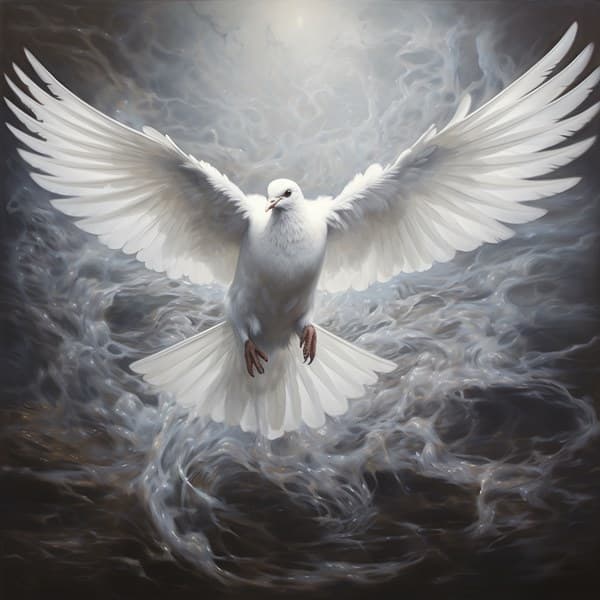
A white dove over troubled waters

At 22 degrees of Taurus, the white dove no longer represents innocence descending. It is a bird that has already learned what troubled waters mean. The symbol shows not arrival but persistence: a creature that continues to fly because stopping is no longer an option. This is the psychology of someone who has moved through enough conflict to understand that peace is not a state you enter. It is a deliberate, exhausting act of refusal to sink. The dove's whiteness here is not purity. It is visibility. You cannot hide what you are choosing. Everyone sees the flight.
The central tension is between the desire for safety and the knowledge that safety requires constant motion. Taurus ordinarily seeks rest, accumulation, and the pleasure of staying put. But at this late degree, the Taurus impulse has been complicated by experience. You have learned that the ground beneath you is not always solid. Rather than abandon the Taurus need for security, you have reorganized it: security now means the discipline to keep moving, to maintain altitude, to not let the turbulence pull you down into the water. You find yourself in conversations where you say things like "I just need to stay calm" or "I'm not going to let this affect me," and there is a flatness to these statements because they cost you something real. The performance of calm has become indistinguishable from the thing itself.
What this pattern protects against is the Taurus terror of loss of control. By staying aloft, you avoid the vulnerability of being submerged, of having to swim, of being dependent on rescue. You notice that you rarely ask for help during difficult periods. Instead, you manage. You maintain. You keep your wing-beat steady even when exhaustion is real. This is not strength. It is a specific trade: you have chosen the burden of self-sufficiency over the risk of being seen as weak. The troubled waters represent not just external chaos but your own fear that if you stop flying, you will drown in it.
At this degree, the symbol has already moved beyond the question of whether the dove can survive. It has survived. What remains is the question of whether survival has become the only thing you know how to do. You may notice that you have forgotten what it felt like to want something other than stability. Rest feels dangerous. Pleasure without vigilance feels irresponsible. You maintain your composure so consistently that people assume you are fine, and you have stopped correcting them because correcting them would require landing, and landing feels like failure. The cost of this pattern is not visible from the outside. It accumulates in the body, in the tightness you carry, in the relationships you keep at a distance because intimacy would require you to admit you are tired.
The choice point is not whether to keep flying or to stop. It is whether you can fly and also admit what the flying costs. Notice when you describe your situation as "manageable" and feel the relief in that word. Notice what you are managing. The waters are troubled. The dove is real. What matters now is whether you can acknowledge both without turning either one into proof that you must never land.