
Taurus 29 Sabian
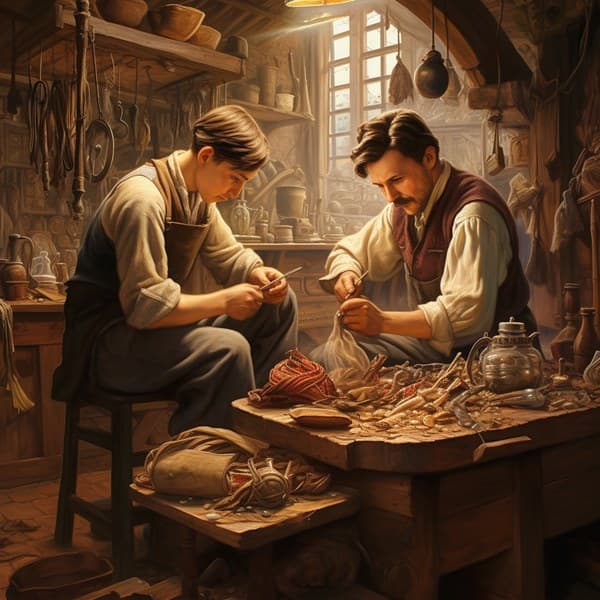
Two cobblers working at a table

At 29 degrees, Taurus is no longer building. It is finishing. The two cobblers bent over their shared table are not learning the craft or dreaming of mastery. They are repeating a motion they have performed ten thousand times. The psychological tension here is between the comfort of mastery and the trap of arrested development. This placement has become so skilled at maintaining what exists that it no longer notices whether it still serves. The rhythm of the work—the hammer strike, the stitch, the polish—has become a container for avoidance. There is protection in competence. What this energy is protected against is the terrifying emptiness that might open if the work stopped.
This is the degree of the craftsperson who knows exactly how to keep things running but has forgotten why they started. There is a tendency to show up to the same table and perform the same gestures with the hands. There is dignity in this, and there is also a kind of death. The trade made here is this: growth is exchanged for certainty, novelty for safety, the risk of failure for the guarantee of adequacy. This energy can lead to staying late at work not because the project demands it, but because the moment of leaving forces an admission that nothing meaningful has changed in three years. The work itself becomes a way to not think about the work.
What makes this degree late—what distinguishes it from a younger Taurus learning a skill—is the weight of repetition. The cobblers are not excited. They are not frustrated either. They are settled into a groove so deep that the groove itself has become invisible. This shows up in how routines are defended: not with enthusiasm, but with reasons. There is an explanation for why this is the way it has always been done. There is a focus on how efficient the system is. What goes unmentioned is that the expectation of anything different has ceased. The failure mode here is not laziness. It is the tendency to become so reliable that reliability has replaced purpose.
The question is not whether to leave the table. The question is whether the table can be seen clearly enough to make a choice about it. Right now the focus is only on the work itself—the familiar motions, the predictable outcomes. What is not being noticed is the cost of staying, which compounds so quietly that by the time it is felt, it has already shaped life. Notice where it is called loyalty, but it is actually inertia. Notice where a position is defended not because of belief, but because it has been occupied so long that leaving would mean admitting time was wasted.
The next gesture matters now. Not the next grand change, but the smallest possible disruption to the pattern. It could be a question asked instead of answered. It could be one task left undone. It could be sitting at the table and letting yourself feel bored instead of filling the boredom with purpose. The work will not end. But the pretense that it is enough can be ended.

























