
Taurus 30 Sabian
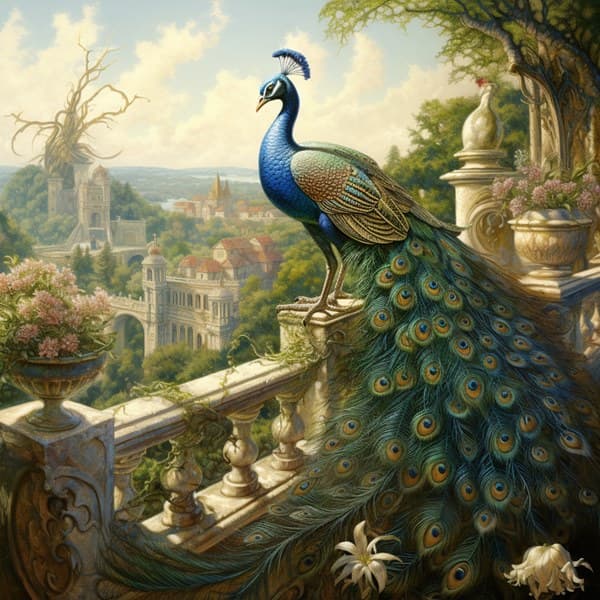
A peacock parading on an ancient lawn

At the end of Taurus, the peacock is not arriving. It is performing what has already been decided. The bird moves through a space that belongs to someone else—the old castle, the inherited structure, the stage that was built long before the display began. This is the psychology of the late-degree Taurus placement: not the raw hunger for possession or the middle-degree testing of what can be held, but the exhaustion of having to maintain the appearance of solidity when the foundation itself is no longer questioned. The peacock does not ask whether the terrace will hold. It walks as though the answer is settled. This placement often does the same: moving through a life that feels predetermined, performing a version of self that has calcified into routine. The display continues. The audience may have stopped watching, but the feathers unfold anyway.
The central tension here is between visibility and emptiness. The peacock's entire organism is organized around being seen, yet the old castle—the structure supporting the display—is itself a ruin. What appears as confidence is actually a kind of arrested motion. This energy can create an identity built around being noticed, admired, or envied, even when the machinery underneath has grown stale. There is a tendency to send a photo of yourself in a new outfit to someone who no longer asks. There is a pattern of maintaining a reputation in a field already left emotionally. There is a habit of keeping the apartment immaculate for guests who stopped coming years ago. The performance does not require an audience anymore; it requires only that the display continues as though one exists. This is not vanity in the crude sense. This is the exhaustion of having made yourself into an ornament and discovering that ornaments cannot move on their own.
What this pattern protects against is the terror of being ordinary. As long as the display continues, there is no invisibility. As long as the parade continues, there is no need to ask what happens when the performance ends. The trade is steep: the possibility of genuine rest is traded for the perpetual maintenance of an image. Spontaneous desire is traded for choreographed wanting. The freedom to be unremarkable is traded for the burden of never being allowed to disappoint. The castle itself—the inherited structure—offers the illusion that the display is necessary, that something important is being maintained. But the castle is old. It does not need your feathers. It needs nothing from you at all.
Notice where you are still moving through a space as though you are being watched when the watchers have long since left. Notice the specific moments when you catch yourself performing even when alone—the way you sit, the words you choose, the version of yourself you present to the mirror. The question is not whether to stop displaying. The question is whether you can display something true, or whether the machinery of display has become so rigid that only the false can move through it. You are at a threshold. The old castle will stand whether or not you parade. What remains to be decided is whether you will.

























