Taurus 5 Sabian
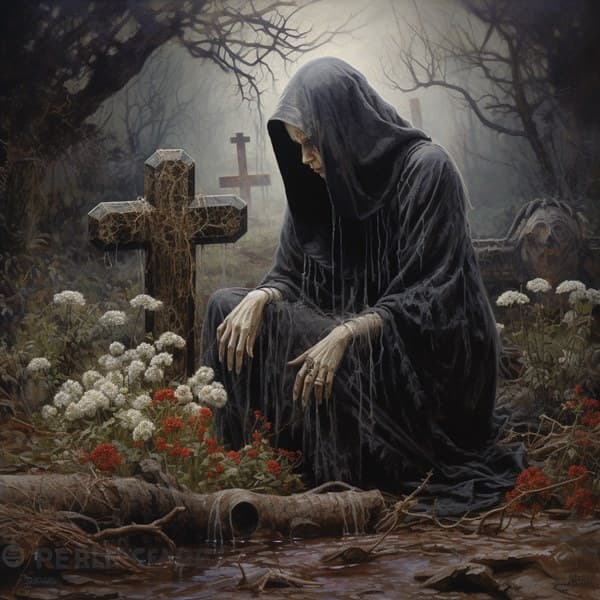
A widow at an open grave


The widow at the open grave is not mourning. She is standing at the edge of a loss that has already happened, and what organizes her posture is not grief but the raw confrontation with what remains when what was promised is gone. In Taurus, the sign of what we hold, what we own, what we expect to stay solid, this image arrives early—at degree 5, where the impulse is still unformed, still deciding what it means. The central tension is this: Taurus builds its security on permanence, on things that do not move. A grave is the place where permanence becomes impossible. The widow knows this now in her body, not as philosophy but as fact. She is not weeping at the degree of raw initiation; she is standing there, which is harder.
What this symbol reveals is the Taurus impulse to control loss by refusing to look at it—and what happens when that refusal becomes impossible. You may find yourself holding onto relationships, possessions, or versions of yourself long after they have stopped serving you, not because you love them but because releasing them feels like admitting you were wrong to have chosen them. You may reorganize your entire life around a single person or outcome, building walls of loyalty and routine so high that when the thing you built for disappears, you are left standing in the structure with nothing inside it. The widow at the grave has already paid the price of that bet. She chose to stay. She chose to believe it would last. Now she is looking at what her choice has cost.
The failure mode of this degree is the confusion between loyalty and self-protection. You may mistake your refusal to leave for devotion, your inability to imagine alternatives for commitment. You are protecting yourself against the knowledge that you chose wrong—that your judgment about what would last was faulty. So you stay longer. You pay more. You forgive what should not be forgiven. The widow's open grave is what happens when that strategy finally breaks. She has nothing left to protect. The thing she held is gone. And she is still standing there, which means some part of her is still trying to make sense of the choice she made, still trying to extract meaning from the loss rather than simply feeling it.
What you are really protecting against is the recognition that security is not something you can guarantee through effort or loyalty or the right choice. You cannot build a structure so solid that loss cannot find you. The widow knows this now. She is at the degree where that knowledge is still raw, still undigested. She has not yet decided what to do with it. Notice where you are still standing at the edge of something you have already lost, waiting for it to change, waiting for your presence there to make a difference. Notice the moment when you realize that waiting is the only thing left to give. That is when the real choice begins.
The next step is not to grieve better or to move on faster. It is to ask yourself what you are still protecting by standing at that grave. What version of yourself—what version of your judgment, your loyalty, your ability to choose well—are you refusing to let die? The widow's real work is not at the grave. It is in the choice to step away from it, knowing that stepping away does not erase the choice she made or the time she spent. It simply means she is no longer organizing her life around what is already gone.