Ascendant Sesquiquadrate Vertex
A weight of sudden recognition

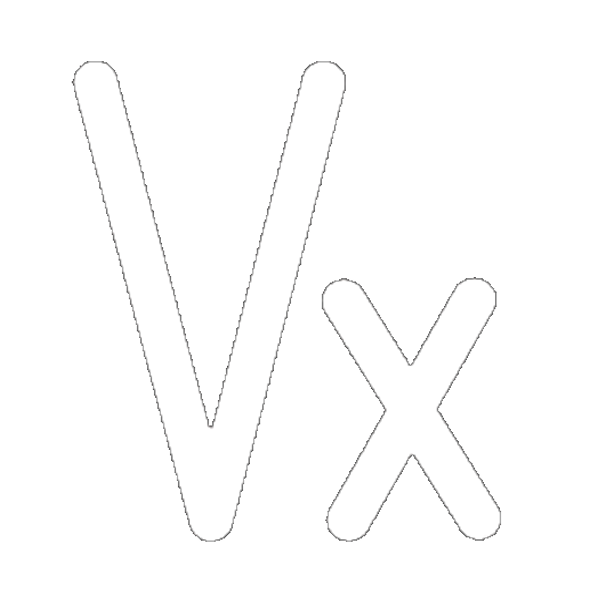
The Ascendant person presents a self that the Vertex person registers as consequential, not immediately, but with a peculiar weight that arrives before context justifies it. The Vertex person experiences the Ascendant person's manner, tone, or simple presence as a threshold, a moment where something shifts in their own trajectory. This is not charm or magnetism in the conventional sense; it is recognition of significance. The Ascendant person, meanwhile, senses they are being read as important by someone they may have just met, and this creates a low-level dissonance: their self-presentation, which they have calibrated for ordinary social navigation, suddenly feels inadequate or too small for the role being assigned to them.
The sesquiquadrate (135°) introduces friction into what might otherwise feel like simple mutual recognition. The Ascendant person's way of showing up in the world does not align cleanly with the Vertex person's sense of destiny or turning-point awareness. Where the Vertex person feels a door opening, the Ascendant person may feel pressure to become something they are not yet ready to claim. They might respond by sharpening their boundaries, withdrawing slightly, or overcompensating with extra clarity about who they are, all of which the Vertex person may interpret as resistance or guardedness, when it is actually self-protection against being cast into a role. Simultaneously, the Vertex person may feel the Ascendant person is skirting around the real conversation, when they are simply trying to keep the interaction grounded and mutual.
This aspect creates a specific behavioral pattern: early conversations carry disproportionate weight. A casual remark from the Ascendant person lands like prophecy in the Vertex person's mind; the Vertex person's questions feel to the Ascendant person like interrogation about their life's purpose when they only meant to exchange pleasantries. Neither person is wrong. The Vertex person is genuinely sensing a pivot point; the Ascendant person is genuinely trying to present themselves accurately without inflating the moment. The mismatch is not about dishonesty but about different temporal frames colliding. The Ascendant person lives in the present interaction; the Vertex person lives in the meaning the interaction will later acquire.
Over time, this aspect can mature into something useful: the Vertex person's capacity to sense significance becomes a mirror that helps the Ascendant person recognize their own impact and authenticity. The Ascendant person's grounded self-presentation can anchor the Vertex person's tendency to mythologize chance encounters. But this requires both people to name the mismatch directly. Without that naming, the Ascendant person may feel chronically misunderstood or over-interpreted, while the Vertex person may experience them as evasive or emotionally shallow, neither of which is accurate. The real friction emerges when one person's "just saying hello" and the other person's "this matters" cannot both be true in the same moment.